

Germany 2026
Media Pluralism Monitor 2026 results
Risk score: 30%
| Fundamental Protection | 24% |
| Market Plurality | 49% |
| Political Independence | 17% |
| Social Inclusiveness | 30% |
In-depth analysis:
Read the full MPM2026 Country report
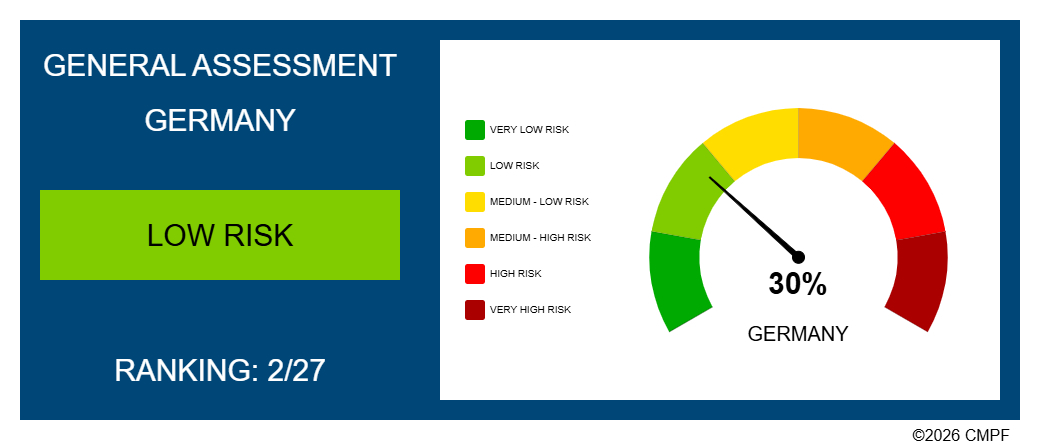
Country overview
Germany’s political landscape in 2025 was shaped by the aftermath of the collapse of the federal “Ampel” coalition and the early federal elections held in February. The elections resulted in a victory for the conservative bloc CDU/CSU, paving the way for a new coalition between the Christian Democrats and the Social Democratic Party (SPD). In May 2025, Friedrich Merz became Federal Chancellor, heading a CDU/CSU–SPD government that replaced the previous administration led by Olaf Scholz. The formation of this “grand coalition” was widely interpreted as an attempt to stabilize the political system after a period of intense fragmentation and rising support for the far-right Alternative für Deutschland (AfD), which had achieved historically strong electoral results and remained a central challenge to Germany’s traditional parties.
For the media sector, political debates focused on the role of digital platforms and the future structure of public service media. The reform of Germany’s public broadcasting system continued to dominate policy discussions in 2025. Building on earlier reforms, the Länder pursued further restructuring measures aimed at increasing efficiency, reducing program duplication, and strengthening cooperation between public broadcasters such as ARD, ZDF and Deutschlandradio. The ongoing reform process also addressed questions about the scope of public service content, particularly regarding online offerings and press-like formats, as well as governance and transparency rules.
The Reform Treaty on Public Broadcasting also establishes the goal of further developing the digital platform strategy of ARD, ZDF, and Deutschlandradio into a shared, public-interest-oriented public space on the internet (“Public Open Space”). The State Treaty establishes this concept as a strategic realignment against the market power of international commercial platforms.
In parallel, regulatory developments focused strongly on digital platform governance. At the European level, the implementation of the Digital Markets Act (DMA) and the continued enforcement of the Digital Services Act (DSA) further shaped Germany’s media and platform regulation landscape. National debates increasingly centered on the power of large online platforms and their impact on media pluralism, youth protection, and democratic discourse. In this context, policymakers discussed stronger restrictions on the use of social media by minors, including proposals for age-based access limitations and stricter platform accountability rules.
At the regulatory level, Germany also continued to adapt its federal media governance framework. The Digital Media State Treaty (Digital-Medienstaatsvertrag, DMStV) progressed in stages. The first part came into force in 2025 and aligned German regulation more closely with evolving EU standards such as EMFA. Additional key points for a second stage were developed in 2025 to further refine national platform regulation. Proposals include guidelines for the discoverability of individual journalistic content, for example in news feeds. Also under discussion are journalistic standards of care for AI systems and a reform of media concentration laws that also takes into account the influence of digital platforms.
Finally, structural developments in the European media market also influenced the German media landscape. One prominent issue was the expansion strategy of the Italian media group MFE-MediaForEurope and its takeover of ProSiebenSat.1 Media SE. In 2025, layoffs occurred in the media sector. For example, RTL Germany, as part of a comprehensive restructuring, cut a total of around 600 jobs, including approximately 230 in RTL News, in order to focus more strongly on streaming and digital formats. The reasons for this were declining advertising revenues in traditional television.
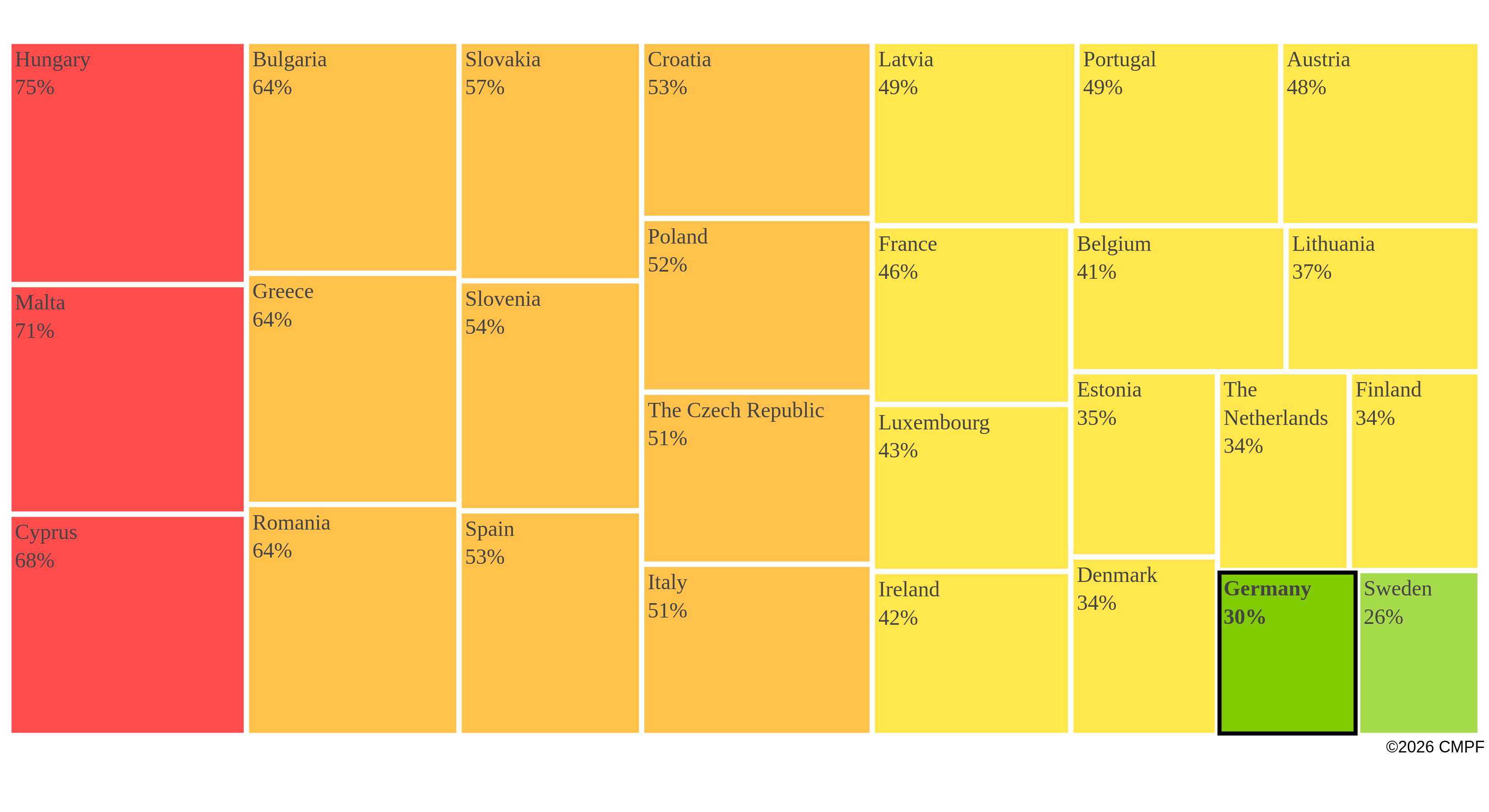
Fundamental Protection
The Fundamental Protection area fell within the low risk band. Key points include:
- The Digital Services Act (DSA) and the national Digital Services Act (Digitale-Dienste-Gesetz, DDG) became fully operational in 2025, establishing the Federal Network Agency as the central Digital Services Coordinator (DSC).
- The far-right media company COMPACT-Magazin GmbH was banned by the Federal Ministry of the Interior in July 2024 because, according to the ban order, it acted as a “mouthpiece for the far-right scene” and was directed against the free democratic basic order. However, the Federal Administrative Court finally overturned this ban in June 2025 as unlawful, which is why the magazine is allowed to be published again.
- A significant procedural barrier was introduced by the Federal Administrative Court’s ruling that anonymous or pseudonymous Federal Freedom of Information Act (IFG) requests to obtain informations from public authorities are inadmissible, complicating digital transparency efforts.
- The number of physical attacks on journalists reached a record high, with 98 verified cases reported for the previous period, predominantly occurring during protests and demonstrations.
- Germany was fined €34 million by the European Court of Justice (ECJ) due to the significant delay in transposing the EU Whistleblowing Directive into national law.
Market Plurality
The area of Market Plurality continues to carry the highest risk score among all four areas, placing it within the medium-low risk zone for 2025. Key points include:
- The 8th KEK Concentration Report (2025) explicitly warned of “new threats to diversity” posed by the algorithmic gatekeeping power of global search engines and social media platforms.
- Economic transformation remains high-stress; while streaming ad revenues grew by 15%, traditional TV advertising fell by 7%, leading to massive layoffs at major houses like RTL and Axel Springer.
- Market concentration in digital advertising remains extreme, with Google, Meta, and Amazon controlling around 72% of the German digital advertising market.
- The KEK media database was legally designated as the national repository under Art. 6 EMFA, though critics point to remaining gaps regarding the disclosure of beneficial owners (UBOs).
- Major publishers (e.g., Axel Springer, RTL/Bertelsmann) concluded individual licensing deals with AI providers like OpenAI, raising concerns about market transparency for smaller outlets.
Political Independence
The Political Independence area fell within the low risk band. Key points include:
- A crisis emerged as several federal states blocked the KEF-recommended increase of the broadcasting fee to €18.94, challenging the principle of non-political financial assessment.
- The “Reformstaatsvertrag” (2025) initiated a significant restructuring of public service media (PSM), focusing on the consolidation of linear channels and digital transformation but also introduced the aim to further develop PSM as a Public Open Space.
- Self-regulatory frameworks like “Redaktionsstatute” remain vital, yet the shift toward AI-generated content has triggered new debates about maintaining editorial independence from commercial tech providers.
- Widespread “shadow campaigning” was identified during the February 2025 federal elections, particularly on TikTok, where hundreds of “murky accounts” impersonated official party channels or disseminated political messaging without proper funding labels. This was compounded by AI-generated political ads that lacked mandatory disclosure, effectively bypassing platform-level transparency archives and making it nearly impossible for voters to distinguish between authentic grassroots support and coordinated influence operations.
Social Inclusiveness
The Social Inclusiveness area fell within the low risk band. Key points include:
- Gender equality saw a setback in private media leadership, with the women’s share in the RTL board falling to 20% and ProSiebenSat.1 appointing a purely male executive board.
- In 2025, media organizations completed the public value assessment process for the second time. This process identifies media offerings that make a significant contribution to diversity of opinion and content and must therefore be made easily discoverable to users on user interfaces.
- State media authorities reported over 2,000 violations related to hate speech and illegal content on major platforms (VLOPs) to the EU Commission in 2024/2025.
- The economic pressure on the local press intensified, with rising delivery costs leading to the first regions in Germany losing physical daily newspaper delivery.