

Estonia 2026
Media Pluralism Monitor 2026 results
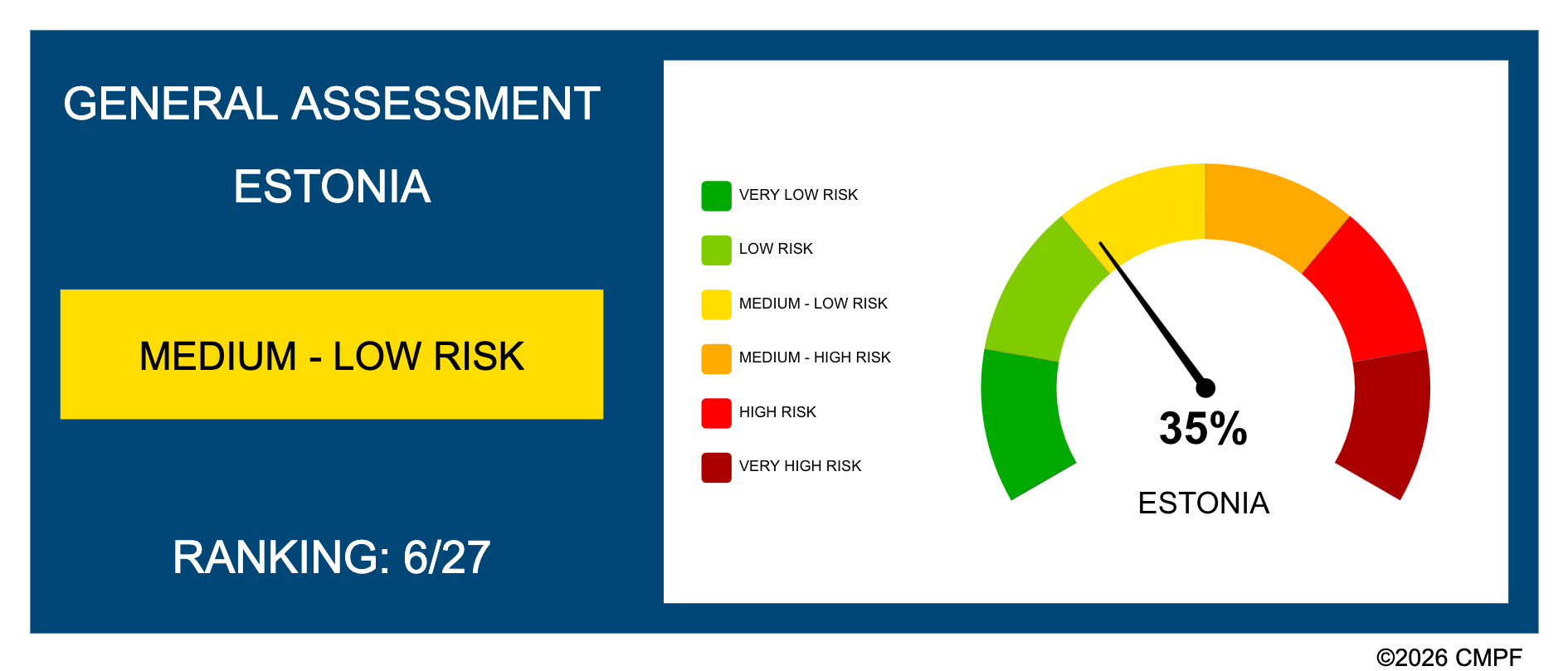
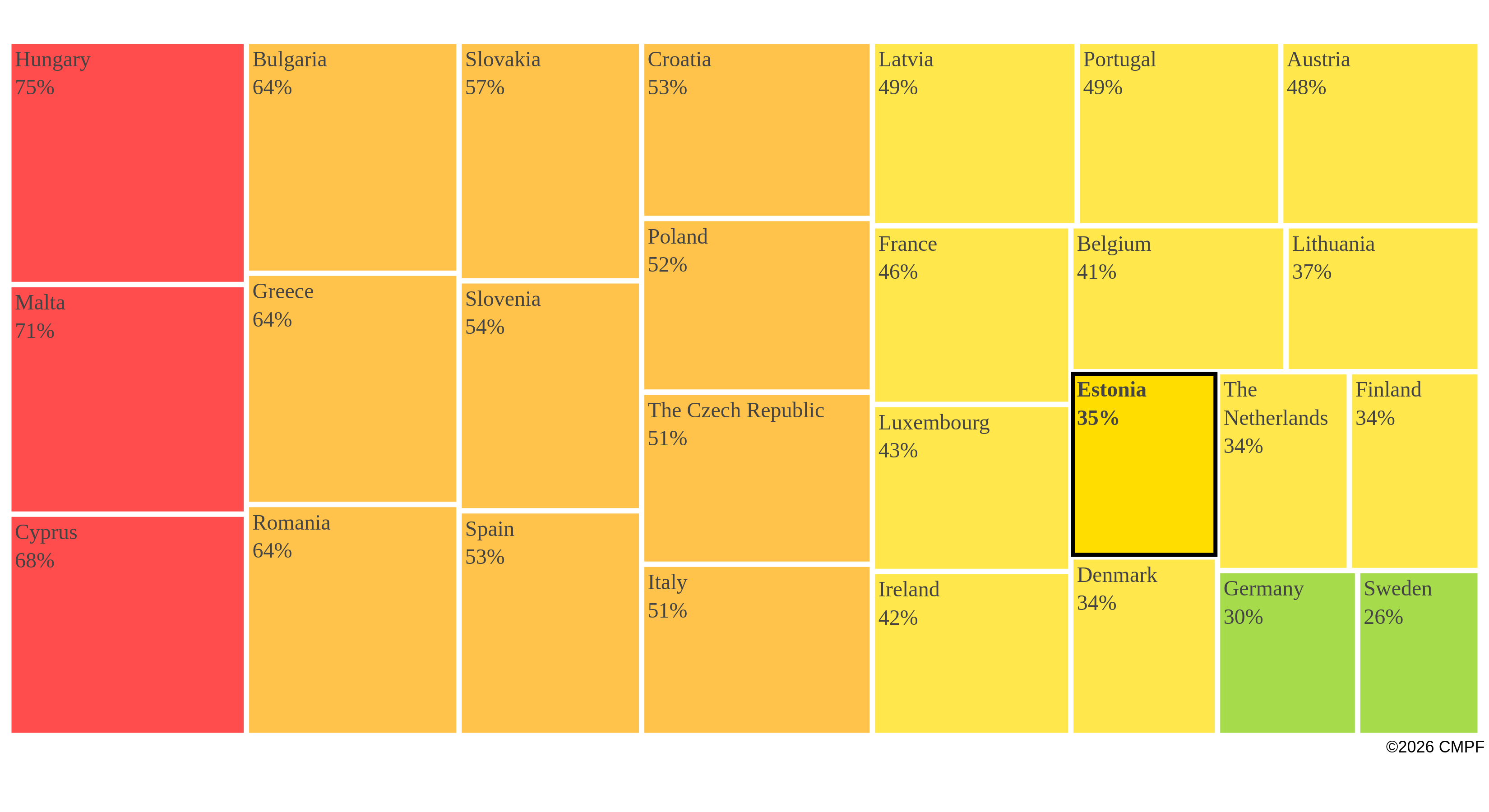
Risk score: 35%
| Fundamental Protection | 21% |
| Market Plurality | 55% |
| Political Independence | 22% |
| Social Inclusiveness | 43% |
In-depth analysis:
Read the full MPM2026 Country report
Country overview
Estonian media policy is liberal and is based primarily on self-regulation by private media and the minimum requirements adopted from the European regulatory framework. The process of transposing the European Media Freedom Regulation and other EU regulatory acts binding on Member States is underway, and the relevant draft laws have been submitted to the Government of the Republic and the Parliament (Riigikogu). Approval by the Riigikogu is expected in 2026.
Estonia continues to rank among the countries with the highest levels of press freedom globally, ranking second in the World Press Freedom Index, according to Reporters Without Borders. Although media freedom in Estonia is very high, the media market remains concentrated due to the small size of the market and pressure from global platforms.
In 2025, the newspaper Eesti Päevaleht, which was integrated into Delfi Meedia, ceased publication. Delfi Media AS has also taken full control of Õhtuleht Kirjastuse AS, the publisher of the daily newspaper Õhtuleht. As a result of these processes, two media houses dominate the private media market nationwide: Delfi Media AS and AS Postimees Grupp (together with Duo Media Network OÜ).
The third key player in the media market is the public broadcaster, Estonian Public Broadcasting (Eesti Rahvusringhääling – ERR).
Fundamental Protection
The Fundamental Protection area scores within the low risk band. Key points include:
- Defamation remains a criminal offense punashable under Article 275 of the Estonian Penal Code [Karistusseadustik] (Riigikogu, 2001). Defamation of a representative of the state performing his or her official duties is punishable by a pecuniary punishment or up to two years’ imprisonment.
- The implementation of the EU’s anti-SLAPP directive is in the final phase. The plan is to transpose the directive by the 2026 deadline. The Estonian Journalists’ Association has been designated as the local contact point to support and advise journalists.
- Media regulation in Estonia is largely based on effective self-regulation. The Press Council is independent of state authority and economic and political influence in its decisions. The national media regulator, the Consumer Protection and Technical Regulatory Authority (CPTRA), exercises supervision only within the limits set by law. Also, CPTRA acts independently from political and economic influences.
- For 2025, there is no information indicating that platforms have restricted individuals’ freedom of expression or media freedom when moderating content. As no problems have arisen, it can be assumed that platforms are fulfilling their obligations responsibly.
- The Whistleblower Directive has been fully transposed.
- The right to information is generally well guaranteed in Estonia through the existing legal framework and established administrative practice.
Market Plurality
Market Plurality is associated with a medium-high risk as the most sensitive area among the four assessed. The situation in the area remains stable, with no legislative changes or de facto developments. Key points include:
- Despite the general economic stagnation in Estonia (IMF, 2025), the private media’s financial performance has remained stable or even improved, with growth in paid digital subscriptions serving as a significant factor (EML, 2026).
- Still, the longer-term perspective is less optimistic. The deterioration of the economic situation, the expected negative impact of the adoption of artificial intelligence on media consumption, and the exhaustion of market potential due to intense competition are all factors that, in the long term, point to a worsening situation for the media sector.
- Media concentration is significant across all sectors, including television, radio, print, and online media. In the first three sectors, the market is primarily controlled by three or four local companies. However, in the online sector, the major players are global platforms. In Estonia, the online press media market is dominated by three local companies: Delfi Meedia, Postimees Grupp, and Eesti Rahvusringhääling.
- The ownership of all Estonian media—print, broadcast, and digital—is fully transparent. Information regarding media owners and their ultimate beneficiaries is readily accessible to all interested parties through the e-Business Register.
- Editorial independence remains vulnerable to commercial and owner influence, with insufficient legal or self-regulatory safeguards against arbitrary interventions, exacerbated by political pressures.
- Industry-wide norms exist but are largely based on self-regulation, lack uniform adoption across the sector, and leave editorial autonomy at risk.
Political Independence
The Political Independence area registered a low risk score. Key points include:
- Estonian public service media and private media enjoy a high degree of political independence. The Estonian media is free from political influences, as confirmed by Estonia’s very high position in the Reporters Without Borders press freedom ranking (Reporters Without Borders, 2025). The key factor behind this ranking is the press’s strong self-regulation under the Code of Ethics for Journalists (EML, 2025).
- Regulation (EU) 2024/900 of the European Parliament and of the Council of 13 March 2024 on the transparency and targeting of political advertising (OJ L, 2024/900, 20.3.2024) has introduced clear rules and guidelines for labelling political advertising. The Regulation entered into force on October 10, 2025 and is directly applicable in all Member States.
- All candidates and political parties must present detailed reports about their spending, received funding and in-kind support, donations, etc., to the Political Party Funding Supervision Committee.
Social Inclusiveness
The Social Inclusiveness registered a medium-low risk score. The situation in the area remains stable, with no legislative changes or de facto developments in 2025. Key points include:
- Estonia has not criminalised hate speech; however, toxic comments that could be regarded as hate speech are present in media commentary sections and on social media.
- Although the existence of local media outlets remained stable in 2025, they remain threatened by global internet platforms that divert advertising revenue away from domestic providers.
- Overall, Estonia has succeeded in increasing the number of digital subscriptions (EML, 2026); however, there remains a persistent risk that lower-income groups may be unable to afford paid subscriptions, thereby limiting their access to daily news and information.