


Read more
Blog, Discussion Series
Big Tech, AI, and journalism: visibility, authority, and viability
With Big Tech being the gatekeepers of information and with AI, GenAI, chatbots accelerating, visibility, authority and viability of journalism is ever more at stake. With algorithms prioritising disinformation, toxic news, emotions and lies,...
Across Europe, there are concerns surrounding the state of media freedom and the democratic decline that we have witnessed, with journalists facing a hostile environment, including threatening legal tactics, the rise of Strategic Lawsuits against Public Participation (SLAPPs), online and physical harassment, and surveillance on journalists.
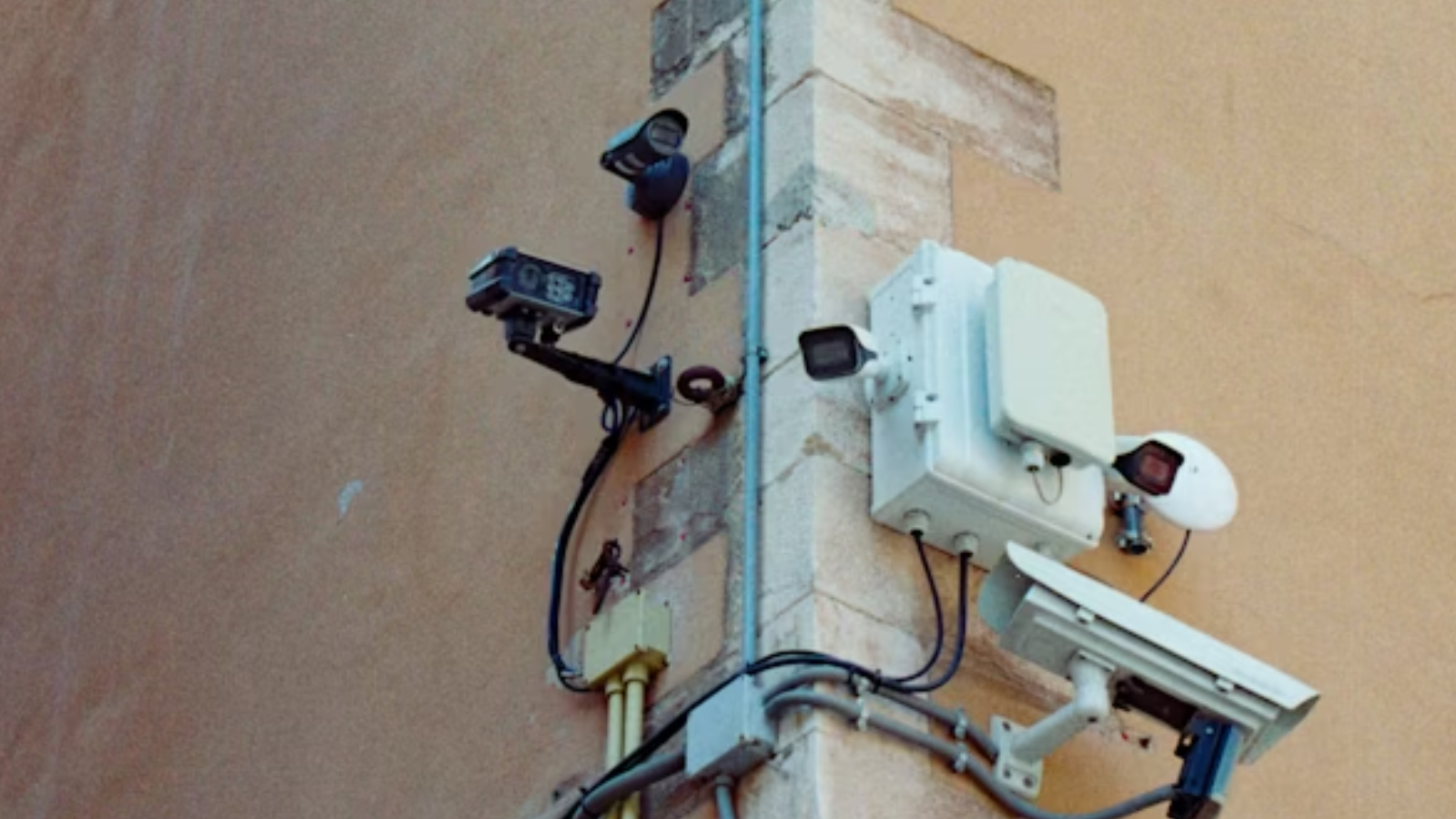
The introduction of the European Media Freedom Act (EMFA) in May 2024 was designed to try to protect media freedom at a time when it is under threat from autocratic states and the rise of right-wing populism across the continent. One area that the EMFA attempts to address is that of state surveillance against journalists. Article 4 of the EMFA is certainly an important piece of legislation at a time when journalists have found themselves under surveillance for their reporting.
Indeed, there are a number of prominent examples involving journalists being subject to surveillance and the ‘Pegasus Project’ shone a light on the threat that spyware poses to journalists. Article 4 of the EMFA focuses on the protection of journalists’ sources from surveillance tools, stating that: ‘Member States shall ensure that journalistic sources and confidential communications are effectively protected’. Despite this, however, there are reasons why States can deploy surveillance on journalists, such as for investigating offences listed in Article 2(2) of Framework Decision 2002/584/JHA, or for ‘serious crimes’, punishable by at least five years, as defined in the national laws of Member States. Furthermore, as per Article 4(4)(c), Member States may also deploy surveillance ‘by an overriding reason of public interest’ so long as it is ‘justified on a case-by-case basis’.
The concept of the public interest has always been somewhat flexible, with judges reluctant to provide a solid definition or list of reasons on why something might be in the public interest. However, the concern is that the concept has the potential to be used and abused by states to deploy surveillance on journalists because they consider their justification to be in the ‘public interest’. Indeed, the EMFA offers no further guidance on what should be considered to be in the public interest, only acknowledging the important role of public interest reporting and ensuring that it is protected, as per Recital 19:
Without such protection, the free flow of sources to media service providers could be deterred and thus, the free exercise of the economic activity by media service providers could be hindered to the detriment of the provision of information to the public, including on matters of public interest.
While a solid definition of the public interest has never been given to allow room for adaptability and to judge each case on its own individual merits, the fact that a public interest clause exists in Article 4(4)(d) opens the door for the potential deployment of surveillance techniques while hiding behind a flexible concept.
The public interest in protecting sources
The ECtHR has provided some guidance when it comes to recognising when something might be in the public interest. In the case of Satakunnan Markkinapörssi Oy and Satamedia Oy v Finland they stated that:
Public interest ordinarily relates to matters which affect the public to such an extent that it may legitimately take an interest in them, which attract its attention or which concern it to a significant degree, especially in that they affect the well-being of citizens or the life of the community [171].
Furthermore, the ECtHR has consistently held that the protection of journalistic sources is essential for press freedom to flourish, placing a positive obligation on states to ensure this. In the case of Goodwin v the United Kingdom, they stated that:
Without such protection, sources may be deterred from assisting the press in informing the public on matters of public interest. As a result, the vital public-watchdog role of the press may be undermined, and the ability of the press to provide accurate and reliable information may be adversely affected [39].
Certainly, without this protection, the ECtHR recognise that public interest journalism may be at risk. As acknowledged in Goodwin, sources may not be willing to come forward with information if they are fearful that a journalist may be required to disclose their identity. Prior research has shown how journalists have stated that, in some cases, sources only talk to them if they are guaranteed anonymity because they are fearful of repercussions if it was discovered that they have been speaking to journalists.
The abuse of the public interest clause
One way in which the public interest clause in Article 4 has the potential to be abused is by allowing surveillance to be deployed for national security reasons, a clause which had been removed prior to the passing of the EMFA. The national security derogation was removed explicitly during the drafting of the EMFA, with civil society organisations concerned that if left in, then states would continue to abuse their power in deploying surveillance on journalists under the guise of national security. However, paragraph 9 of the EMFA states that: “The Member States’ responsibilities as laid down in the TUE and the TFEU are respected, which include national security, hence, how it can be introduced via the backdoor. Kermer (2024) explains how this could take place as national security could simply be considered a matter of public interest as there is nothing within the EMFA to stop this from happening. Alongside introducing the national security clause through the back door, the fact remains that states, in the past, have been more than willing to use and their power to deploy surveillance due to them believing that it is in the public interest to do so, often using national security as a primary justification, as seen in cases such as Telegraaf Media Nederland Landelijke Media B.V. and others v The Netherlands, and Voskuil v The Netherlands.
Indeed, the introduction of the public interest clause accounts for a whole range of scenarios that could arise for surveillance to be used and leaves states to flexibly determine in which situations the public interest may arise. The concern here is that this flexibility provides an opportunity for abuse of the public interest clause and, at a time when we have seen certain states be openly hostile towards journalists, it would not be a stretch of the imagination that if they wanted to, then they could use the public interest clause to order surveillance on journalists. While the courts might intervene in some cases, this might not always be the case, particularly where we have seen politicisation take place.
Politicisation of the judiciary
Additionally, another pre-requisite of Article 4(4)(d) of the EMFA is that if there is to be surveillance deployed, then ex-ante judicial authorisation should usually be sought, but this authorisation can be ex-post if provided for by national law or Union law and ‘in duly justified and exceptional and urgent cases’ that can be justified on a case-by-case basis ‘by an overriding reason of public interest’. Again, this can leave the door open for states to abuse their position in authorising surveillance as they can simply ask for permission after having granted authorisation, therefore the damage has already been done and the journalist and their source may already have been compromised.
With regard to the public interest clause, courts might be willing to apply a lower threshold of what is considered to be in the public interest due to a lack of independence. In certain member states, politicisation continues to grow. In other instances, governments have tried to limit and curb court’s powers, which impacts their independence, as research has shown has taken place in Hungary and in Poland where backsliding has taken place over several years and has reached a point where ‘governmental domination and influence over the judiciary continues to grow’. The European Network of Councils for the Judiciary (ENCJ), in their 2025 report, noted how from their survey findings, while judges generally evaluated independence positively, there were certain countries, such as Montenegro and Greece, where there was seen to be a decline in independence. If judiciaries are not independent, then this creates an added layer of complexity as they may be more reluctant to go against the state to protect journalists from surveillance.
Monitoring the situation
The aims and intentions of the EMFA are simple: to promote editorial independence and protect media freedom. Nonetheless, the nuances within the Act provide room for states to abuse their power to request surveillance on journalists. The public interest clause that has been introduced in Article 4(4)(c) allows for surveillance on grounds of public policy, public security, public safety and public health (the ‘ORPI principle’) and through this, national security reasons could be used to deploy surveillance as it may be considered a matter of ‘public security’. Again, this is another example of a clause being used to widen reasons why surveillance can be deployed. Nonetheless, Article 4(4)(c) leaves room for surveillance in the interests of national security to take place because it could be considered a matter of public interest. This raises a number of concerns as, in the past, journalists have highlighted just how states have deployed surveillance tactics in the name of national security.
Even if the EMFA explicitly stated that national security should not be considered a matter of public interest, this certainly would seem to go against prior and existing directives. For example, Directive 2006/123/EC on services on the internal market does attempt to offer reasons that are justified as being ‘overriding reasons relating to the public interest’, including ‘public safety’ of which national security could be tied to. Additionally, even if the EMFA explicitly stated that national security should not be considered, that is not to say that states will not find other excuses to engage in surveillance tactics that they consider to be in the public interest, and in certain instances, may have the protection of the national courts.
While cases could still be brought before the ECtHR, where they have often offered a high threshold towards source protection, the fact remains that it is timely and costly to bring a case to the ECtHR. Further guidance to ensure that the threshold for surveillance and source protection is not lowered would be welcome to ensure that journalists are not subject to arbitrary surveillance and to ensure that the EMFA achieves its aim of greater protection for journalism.
Case List
Goodwin v United Kingdom (1996) no.28957/95
Khadija Ismayilova v Azerbaijan (2010) no.65286/13 and 57270/14
Satakunnan Markkinapörssi Oy and Satamedia Oy v Finland (2017) no.931/13
Telegraaf Media Nederland Landelijke Media B.V. and others v The Netherlands (2013) no. 39315/06
Voskuil v The Netherlands (2008) no. 64752/01
Gemma Horton is an Impact Fellow for Centre for Freedom of the Media, School of Information, Journalism and Communication, University of Sheffield.