
Media Pluralism Monitor
The Media Pluralism Monitor (MPM) is a scientific tool developed by the Centre for Media Pluralism and Media Freedom to assess the potential weaknesses in national media systems that may hinder media pluralism.



Our ongoing and past initiatives, advancing knowledge and awareness around media pluralism in Europe and beyond.

Our research is driven by a simple yet key question: how do pluralistic media contribute to democracy, and what can we do to help them fulfill their essential role? We look at both the foundations and the evolving landscape of media systems, from freedom of expression and the rule of law to the way media connects with politics, markets, and society.
One of the most important tools we have developed is the Media Pluralism Monitor (MPM). Since 2013, the MPM has helped us and others assess the risks facing media pluralism across Europe. Policymakers, researchers, and media professionals regularly use it to inform their work.
Our research doesn’t happen in isolation: we publish studies, but we also create spaces for conversation and collaboration through seminars, events, and training. These activities connect us with journalists, regulators, scholars, and other voices who are deeply engaged in shaping the media landscape.
The Media Pluralism Monitor (MPM) is a scientific tool developed by the Centre for Media Pluralism and Media Freedom to assess the potential weaknesses in national media systems that may hinder media pluralism.

From 10 to 12 March 2026 the festival returns for a third edition in Teatro del Maggio in Florence. Bringing citizens, journalists, and media professionals together to explore crucial themes shaping our relationship with information and media.
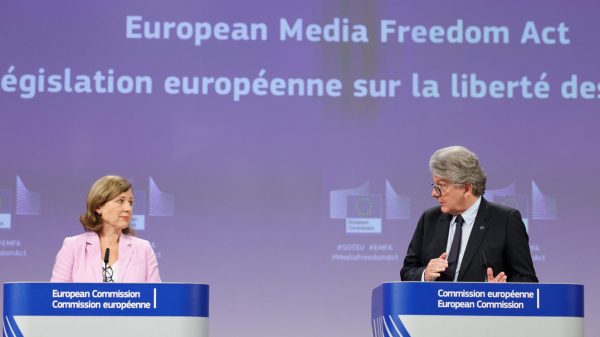
The Observatory on the European Media Freedom Act is a research hub that offers expert analysis and promotes discussion on EMFA and its implementation, with publications, blog posts and webinars.

EDMO fosters collaboration among fact-checkers, media literacy experts, and researchers to better understand and address online disinformation. Since its launch, the CMPF has led the policy task within the project.

The project aims to promote the coherent application of the emerging EU digital acquis with research, policy dialogues, and training.

PROMPT aims to identify solid foundations to design a legal framework that may result politically acceptable and legally effective in Ukraine, and compatible with European standards, against the background of the EU Rule of Law principles.

The project aims to evaluate the feasibility of a European News Streaming Platform (ENSP). This AI-assisted, multilingual platform would be free and accessible to all EU citizens, aiming to enhance their access to quality, independent media.
The project aimed to support local, regional, and community media in Europe’s news deserts by providing financial support and organisational capacity building.

The study explored how media pluralism functions in today’s complex digital environment, focusing on three key areas: the definition of media, prominence and discoverability of general interest content, and media market.
Every summer, our Summer School brings together journalists, media professionals, and researchers from across Europe and beyond for a week of training and exchange.