

Read more
Blog, EMFA Observatory
A ‘media plurality test’ for Italy
Italy’s media landscape is on the brink of a major shift. In this piece, we analyse how this acquisition could trigger the first use of the new EMFA tool to assess threats to media...
Gender parity in the news? 30 years after The Beijing Declaration and Platform for Action (UNWOMEN, 1995), this is still a myth in the European Union. The call to revolutionise gender equality has certainly happened, yet without ever reaching gender parity, at least in the media.
Gender inequalities in the media remains a widespread phenomenon across European countries, according to the Media Pluralism Monitor 2025 (MPM). The MPM consists of a scientific tool that maps weaknesses susceptible to hindering media pluralism in European countries. It uses 20 indicators and a 6-tier scale assessing risks from very low to very high. According to its latest results, gender equality in the media is one of the highest risk-scoring indicators, just after other indicators related to the economic dimension, such as high concentration and its possible impact on editorial autonomy. While the economic threats can be understood based on the structural characteristics of the media markets, the persistent risks related to gender inequality in the media are hardly compatible with the evolution in our societies and the growing role of women in the profession.
Plurality in the media is one of the highest risk-scoring indicators, just after other indicators related to the economic dimension, such as high concentration and its possible impact on editorial autonomy. While the economic threats can be understood based on the structural characteristics of the media markets, the persistent risks related to gender inequality in the media are hardly compatible with the evolution in our societies and the growing role of women in the profession.
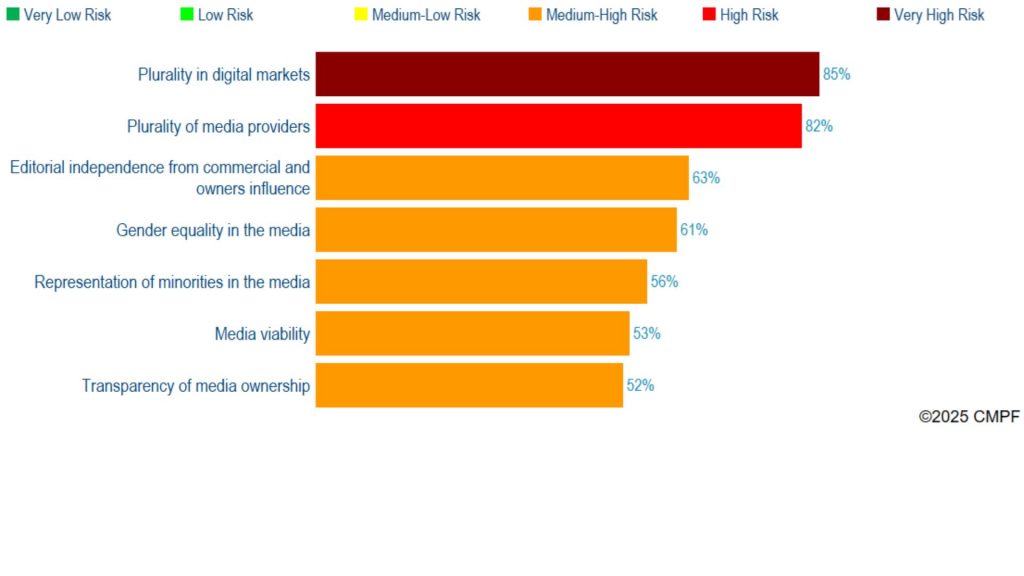
Figure 1 – Top scoring indicators of the MPM2025.
Gender equality in media
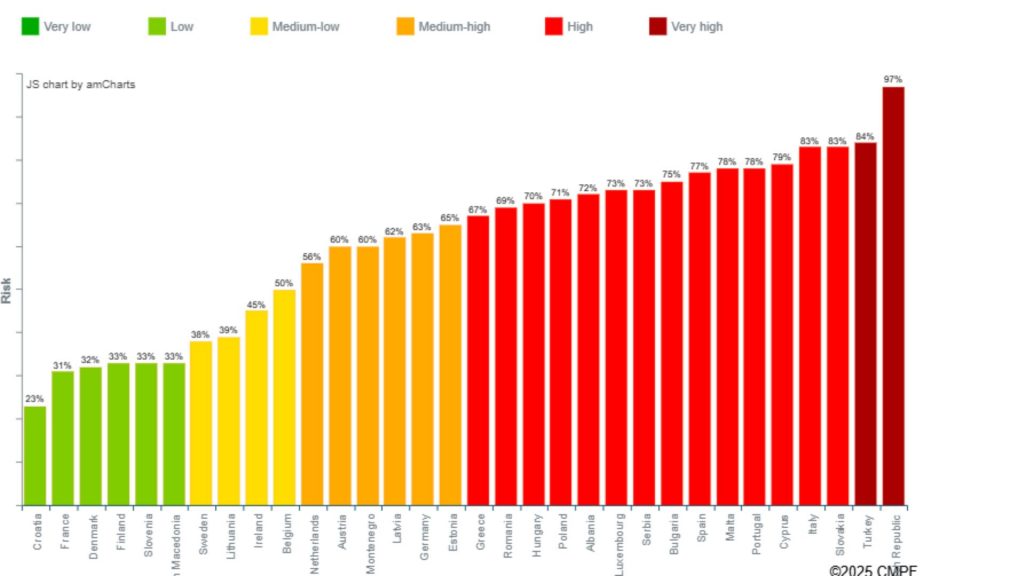
When it comes to gender equality in the media, no country is at very low risk, only 6 countries are at low risk, and 16 countries score high or very high risk. Such score takes into account, in line with the Beijing platform, the presence of women in top management position as well as their representation of women in the media.
Last year, in addition to these two usual standards, the Centre for Media Pluralism and Freedom decided to tackle an issue that has long been overlooked : the representation of women in managerial positions in local media. If gender equality is often studied in the main national media, there are very limited studies regarding local media and gender equality. This is worrisome as local media are a key element of our democracies due to their closer relationship with the public in comparison to national media (Council of Europe, 2023). Indeed, local media enhances the sense of community and provides essential news to the public (e.g. Blagojev & Kermer, 2025, Stearns, 2022; Gulyas & Baines, 2020).
Gender parity in the 27 EU
The latest research in 27 EU countries has shown that the presence of media outlets addressing certain less prominent groups (such as women) is small and that there is a considerable lack of specific data on this very important topic (Verza et al., 2024). Taking this into consideration, for the MPM2025, a variable was added to the MPM questionnaire focusing on the proportion of women among editors-in-chief in local media outlets. To assess whether the representation of women and men among editors-in-chief of local media companies was balanced, local research teams had to create a sample composed of one media outlet per region, including a balanced mix of audiovisual, radio, newspapers, and digital natives. Then, the local country teams had to calculate the share of women among editors-in-chief in the selected media outlets and divide this number by the total number of editors-in-chief. The result obtained for local media companies was compared to the total numbers of editors-in-chief for the main eight national media companies, based on readership and/or impact- including two audiovisual media outlets, two radio, two newspapers, and two digital-only news outlets.
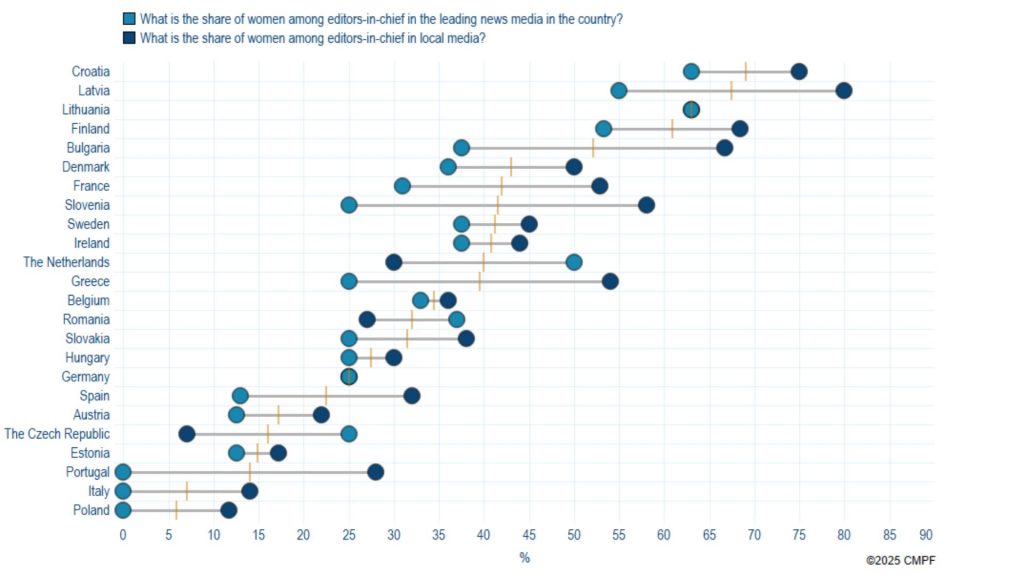
Figure 3- Comparison between the share of women among editors-in-chief in leading news media and in local media.
Contrary to our expectations, and despite significant variations between countries, there are significantly more women editors-in-chief within local media outlets than within main national media outlets. In 2024, the average proportion of women editors-in-chief reaches 29.2% in national media companies, against 39.9% in local media outlets. Only three countries have more women as editors-in-chief of main media: the Netherlands, Romania and the Czech Republic, the latter having the lowest proportion of women among editors-in-chief of local media outlets (7%).
Representation of women editors-in-chief in local media
While the representation of women among local media editors-in-chief seems better among main media editors-in-chief, only nine EU Member States have reached gender parity among editors-in-chief for local media: Latvia, Croatia, Finland, Bulgaria, Lithuania, Slovenia, Greece, France, and Denmark. Among these, the share of women among editors in chief in local media outlets reached more than 60% in Lithuania (63%), Bulgaria (66,7%), Finland (68.4%), Croatia (75%), and Latvia (80%). On the contrary, only five countries reached parity regarding the number of women editors-in-chief for main media: Croatia, Lithuania, Latvia, Finland, and the Netherlands. Parity has been reached among editors-in-chief both in main media and in local media in only four countries: Croatia, Lithuania, Finland and Latvia.
It is interesting to note the poor performances of the Czech Republic, Poland, Italy, Estonia Austria, and Germany. All these countries count less than 25% of women editors-in-chiefs in local media. Italy, where only 14% of local media editors-in-chiefs and 0% of main media editors-in-chief are women, is almost as bad as Poland (11.7% and 0% respectively).
In Italy, despite an ongoing debate regarding the underrepresentation of women across society, out of the 35 top editorial positions there are only two female editors-in-chief in the country: one for national media, Agnese Pini, who oversees the newspapers published under the Quotidiano Nazionale banner (La Nazione, Il Giorno, Il Resto del Carlino), and one for local media, Nunzia Vallini, editor-in-chief of the Giornale di Brescia (Vigevani et al., 2025). Although Estonia performs better than Italy and Poland, it is interesting to note the contrast in its relatively low share of women editors-in-chief (12.5% in main media outlets and 17.2% in local media outlets) compared to the other Baltic countries. According to Estonian gender expert Barbie Pilvre (cited in Palmer & Zuffová, 2024, p. 34), ‘gender equality is not perceived as relevant, especially for generations over 30. (…) This absence of interest can be explained by the Soviet heritage. In the Soviet era, women were part of the workforce, to the same extent as men, and are well-represented among journalists. This gave a kind of illusion of gender equality and prevented the rise of a strong feminist movement’.
A case for Spain
Spain performs better than the previous group of countries, yet parity is far from achieved with 13% of women editors-in-chief at the national level and 32% at the local level, despite a well-developed legal framework in terms of gender equality (Suau Martinez et al., 2025). While the 1978 Spanish Constitution proclaims the equality of women and men, the Organic Law 3/2007 of 22 March, for the effective equality of women and men, aims to implement this proclamation by outlining measures of positive action aimed at eliminating structural and persistent inequalities, including in the field of media. For example, the law obliges media companies to avoid any form of gender discrimination, to respect gender equality, and to promote knowledge and dissemination of the principle of equality. In terms of content, it forbids the diffusion of stereotypical content and in terms of media management, companies must guarantee gender balance and equal treatment in all professional positions. However, imbalances remain in practice, and improvements have slowed in recent years, with women’s rights being seriously threatened by the rise of the far-right.
Other countries
In countries where gender parity in terms of editors-in-chief both at the national and local level is achieved, this does not automatically guarantee quantitative nor qualitative gender balance in news media content. For example, while Lithuania has reached parity in terms of editors-in-chief both at the national and at the local level, women experts tend to remain underrepresented in Lithuanian media, where the figure stands at 30,3% (Jastramskis, 2025). This echoes the situation in Latvia, with existing research showing that women make-up only one-third of experts participating in discussion programmes (Rožukalne & Sprudzāne, 2024 cited in Rožukalne & Skulte, 2025).
In Croatia, the latest conclusions of the daily monitoring conducted by the Ombudsperson for Gender Equality highlighted qualitative issues with ongoing gender biases in media content. Sexism, gender-based violence, sensationalism, and stereotypical portrayals of women remain persistent issues in Croatian media, especially in political commentary and expert analysis (Bilic, 2025). Such findings are in line with Palmer & Urbániková (2025), who highlighted the absence of correlation between the increasing number of women in management positions in broadcasting media and more gender-balanced content. Nevertheless, the equal representation of women as editors-in-chief both at local and national level is essential to progress towards a more inclusive society, local being an often overlooked yet indispensable scale of change.