

Denmark
Media Pluralism Monitor 2025 results
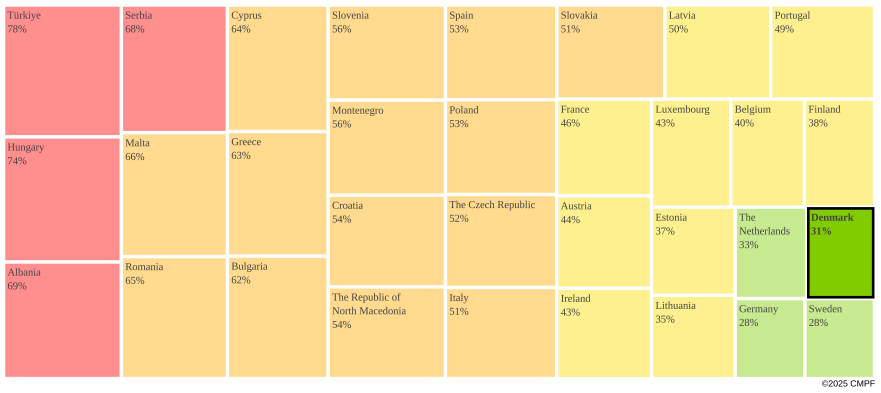
Risk score: 31%
| Fundamental Protection | 15% |
| Market Plurality | 61% |
| Political Independence | 24% |
| Social Inclusiveness | 24% |
In-depth analysis:
Read the full MPM2025 Country report
Country overview
Denmark is a small Scandinavian nation. It has around 5.9 million residents and spans an area of 42,925 square kilometers (Danmarks Statistik, 2024a). Denmark operates as a constitutional monarchy, featuring a stable parliamentary multi-party system. While minority governments have been prevalent historically, the current government holds a majority. The political landscape is distinguished by a robust tradition of interparty collaboration. Crucially, significant labor market matters are addressed through tripartite negotiations involving the government, employers’ associations, and labor unions. The media landscape in Denmark is characterized by a blend of private newspapers and significant state involvement in audio-visual media. Comprehensive media support schemes exist for both state-owned and private media outlets, distributed in a transparent and equitable manner. Notably, Denmark has managed to avoid issues concerning politically-affiliated business owners assuming control of major media outlets for direct or indirect political influence. This success can be attributed to the substantial public service sector and the tradition of foundation ownership. A distinguishing feature of Denmark’s media environment is the government’s support for Danish media and cultural production. Most major Danish newspapers have implemented paywalls for online content, although none have witnessed online revenue growth significant enough to replace income from print. Additionally, these newspapers face stiff competition from tech giants like Facebook and Google for advertising revenue. In the audio-visual sphere, state domination is pronounced. The two largest television stations, Danish Broadcasting Corporation (DR) and TV2, are stateowned entities. DR, funded entirely by the state, holds a dominant Page 6 The Centre for Media Pluralism and Media Freedom is co-financed by the European Union position in radio, television, and online platforms. TV2 operates on an advertising and subscriptionbased model and is renowned for its network of regional news stations, which receive public service funds. Denmark maintains a strong media pluralism framework, but concerns remain regarding free speech restrictions, market concentration, and media viability challenges in the case of regional and local media. New legislation on religious texts and online hate speech raises potential self-censorship risks and has led to convictions for publishing racist jokes online, while digital media regulation is evolving under EU regulatory frameworks. Public service media remain dominant, and efforts to increase transparency, media viability, and diversity in newsrooms are ongoing. Additionally, the media landscape faces increasing challenges from digital monopolies, with Google and Meta controlling a significant share of online traffic. In 2024, the Danish Ministry of Culture established a committee to revise the media support system to address these challenges. The Danish Press Publications Collective Management Organisation (DPCMO) has actively pursued copyright protection and fair compensation through legal actions and negotiations with tech platforms, and called on the EU to strengthen regulatory frameworks addressing digital market dominance and AI governance. While the advertising market has shown growth, traditional print media continue to struggle, leading to job cuts and financial uncertainty. Reforms to the Public Information Act are expected to enhance political transparency, while new AI-driven storytelling methods and digital subscription models reshape journalism’s future. Gender representation and minority inclusion remain areas of concern, with public service broadcasters aiming for more balanced representation. Meanwhile, whistleblower reports have surged, suggesting greater public engagement in media accountability and oversight.
Fundamental Protection
The Fundamental Protection area scores within the very low risk band. Key points include:
- Convictions for racist jokes (2024-2025): Court cases in Denmark have led to convictions for publishing racist jokes online, raising debates about the tightening of free speech laws.
- Denmark implements the Digital Services Act (DSA): The Danish Agency for Digital Government has been appointed as the competent authority for supervising and enforcing the rules. Platforms must now have complaint-handling systems and dispute resolution mechanisms. For example, Appeals Centre Europe (2024) is an out-of-court dispute settlement that has been established in Ireland and reviews content moderation cases across the EU, including Denmark.
- A legislative committee is examining the Public Information Act to improve transparency in political decision-making (Upcoming 2025).
Market Plurality
The Market Plurality area scores within the medium-high risk band. Key points include:
- Advertising market growth: increased spending on digital and TV advertising, but traditional newspapers struggle with declining revenues.
- Market concentration: the Top 4 audiovisual media owners in Denmark collectively control 98% of the audience share, demonstrating an exceptionally high level of market concentration.
- Digital market concentration: a committee have been established to review the media support system in the context of the challenges from digital monopolies. The Danish Press Publications Collective Management Organisation has pursued copyright protection and fair compensation through legal actions and negotiations with tech platforms.
Political Independence
The Political Independence area scores within the low risk band. Key points include:
- EU Regulation on Political Advertising (2025): New transparency rules for online political ads.
- Political bias in public service media: two-thirds of Danes in a recent survey perceived the Danish Broadcasting Corporation as left-leaning and not impartial.
- While Denmark currently operates under a well-functioning, trust-based system that safeguards media independence, such a system remains vulnerable in exceptional circumstances, such as crises.
Social Inclusiveness
The Social Inclusiveness area scores within the low risk band. Key points include:
- Expansion of Media Literacy Programs (2023-2026): Denmark’s new Media Agreement prioritizes digital education, especially for children.
- New EU Accessibility Directive (2025): Denmark must comply with new rules for media accessibility for disabled citizens.
- Local and regional media: Government funding have been redirected to support local journalism, yet still, news deserts are becoming a concern, as local newspapers face closures.

Denmark
(November 2014)
Introduction
The implementation of the MPM2014 for Denmark shows a low/medium risk for media pluralism in the country. According to the results obtained through the implementation of the MPM in Denmark, the risks in the country are divided as follows: 20% (7) of the indicators fall within the zone of high risk; 18% (6) indicate medium risk, and 62% (21) refer to low risk.
Legal Type of Indicators Assessing Risks to Media Pluralism
The overall conclusion of the legal indicators is that they pose relatively low risk. This conclusion is based on the fact that 14 indicators of 20 score low risk, 3 indicators score medium risk (6, 16 and 20), and the remaining 3 indicators assess a high risk (7, 9 and 14).
The system functions based on the arm’s length principle, and it is relatively simple as the rules are adhered to. There is no general media pluralism legislation on ownership, but mergers and acquisitions have to be effectuated in accordance with the general competition rules. The media system is highly influenced by the public service media, especially in radio and television, but also online. This has resulted in recent discussions on competition between public and private media, especially in relation to digital media provisioning. Small markets like the Danish one, with a population of about 5.6 million, will have difficulties in securing the provisioning of sufficient content without some degree of intervention from the state. The Danish model has been one of relatively limited regulation of the private commercial media in terms of content and ownership. However, it has stricter rules on advertising and product placement if compared to the UK, for example. Overall, the system provides an outcome of media pluralism, while taking into account that ownership does not necessarily reduce pluralism of content, but can be necessary to ensure sufficient turnover in order to have a profitable media sector. Nevertheless, potential risks should be explored.
Regarding freedom of information and freedom of speech, the Danish legal system follows the practice of the European court of Human Rights (see also the report from the Mediadem project [https://www.mediadem.eliamep.gr/wp-content/uploads/2012/01/Denmark.pdf]). Denmark does not have a Constitutional Court as such, but its Supreme Court can be considered to have the same functions.
There have been no legal cases (litigation) regarding media pluralism, or regarding limitations on media pluralism. There are no specific laws in Denmark regarding media pluralism, for instance, regarding media concentration, but the issue is covered by the general competition regulation. It is also important to note that the Danish laws on public service radio and television demand diverse programming and that all public service media have editorial freedom. Furthermore, there is a media subsidy system (innovation pool and direct subsidies) for editorial content for the written press online and in print, which is based on a perspective on pluralism. The Danish media system has various boards which function independently of the political system and that work as defined in law and following their statutory obligations. Finally, pluralism of the media and of content is a general principle of the media laws, especially concerning public service and media subsidies.
However, there are three indicators that are assessed as high-risk indicators. For all of them it is important to note, that this is the result of a methodology that is comparative and not finely tuned to the Danish media system in particular. The definition of the indicators and the empirical questions does simply not fit policies in Denmark. Therefore, the risk assessment ‘high’ for the three indicators should not be read as a conclusive empirical analysis, but an issue to be examined further.
Indicator 7 Safeguard for access to airtime on PSM by the various cultural and social groups is one of them as the PSM due to the tradition of editorial independence are not limited by law in any way in terms of choosing who should and should not have access to airtime – outside of elections, where there is an obligation. For instance §10 in the Radio and Television act state that “The overall public service activities shall, via television, radio and the Internet or similar, provide the Danish population with a wide selection of programmes and services comprising news coverage, general information, education, art and entertainment. Quality, versatility and diversity must be aimed at in the range of programmes provided. In the planning of programmes, freedom of information and of expression shall be a primary concern. Objectivity and impartiality must be sought in the information coverage. Programming shall ensure that the general public has access to important information on society and debate. Furthermore, particular emphasis shall be placed on Danish language and culture. Programming shall cover all genres in the production of art and culture and provide programmes that reflect the diversity of cultural interests in Danish society.” (https://www.retsinformation.dk/forms/R0710.aspx?id=161625). This is also reflected in the public service contract, valid until end of 2014 (own translation): “DR in its supply of public service must pursue quality, versatility and diversity. When scheduling, the emphasis must firmly be on the need for freedom of information and freedom of speech. For information, emphasis must be placed on objectivity and impartiality.” (https://kum.dk/uploads/tx_templavoila/DRpublic%20service-kontrakt%20af%203%20%20juni%202013.pdf). The condition that various cultural and social groups do not have access to airtime per definition should not be necessarily considered a risk indicator. Note that various cultural and social groups are not excluded, but they do not have a right to access airtime directly, nor a right for having their own content distributed on the PSM. Nevertheless, there are provisions for services for different social groups.
Another indicator that demonstrates high risk is indicator 9 Regulatory safeguards and policies for regional and local media. Here, the variables must be considered too unspecific for the Danish case, especially variables 3 on media regulation that prohibit networking arrangements between regional/local media and national media and variable 4 on must carry rules). As such, there are regulatory safeguards and policies for regional and local media in Denmark which include the presence of minorities in community radio and television stations, but the way the indicator are defined makes the risk factor high contrary to actual policy.
The last legal indicator scoring high risk is 14 Regulatory safeguards for transparency of ownership and/or control. In Denmark, there are no separate rules on transparency for media companies. Instead they follow the general rules as stated in the Financial Statements Act (https://www.retsinformation.dk/Forms/R0710.aspx?id=135933). Private limited and co-operative companies have to state all owners with more than 5 % ownership. All ownership above 20 % of the shares has to be stated in the annual accounts. The fact that media companies follow the general rules does not mean that there is no transparency or that information is not available. Firstly, everyone can access the annual accounts of media companies, although there is a fee at the company register (cvr.dk), and most companies have the accounts on their website. Furthermore, in terms of ownership of media companies, the Danish Agency for Culture from 2014 publishes a report, including information about the ownership of the main media companies. It is also made publicly available. Additionally, there is an ownership register on its way and it should be ready in early 2015.
Economic Type of Indicators Assessing Risks to Media Pluralism
Denmark is a dual media system with strong public service media. The general competition is an oligopoly in radio, television and print. The online environment is also heavily influenced by competition from the legacy platforms, but remains a bit more diverse, albeit dominated by Google and Facebook. Domestically, the strong public service media (DR, TV 2) dominate the market for radio and television, closely followed by their private commercial competitors SBS Discovery Media (radio and television) and MTG (television). The print/news publisher JP/Politikens Hus and Berlingske Media dominate the national news print market (and also have strong hyperlocal weeklies), but there are strong regional competitors for local news. In recent years there have been a set of mergers and acquisitions within commercial media. Furthermore, the existing media have particularly increased the number of television channels and digital offers (i.e., apps, streaming services, and so on).
The public service media system consists of DR (with the following television channels DR1, DR2, DR3, DRK, Ramasjang and DR Ultra, as well as the following radio channels P1, P2, P3, P4, P5, P6 BEAT, P7 MIX, P8 JAZZ, DR RAMASJANG/ULTRA), TV2/Denmark A/S (the public service channel TV 2, TV 2 Zulu, TV 2 Charlie, TV 2 NEWS, TV 2 Fri and TV 2 FILM), eight regional television stations and 24syv, a privately owned public service radio channel.
The principal commercial television stations are SBS Discovery Media (with the television channels Kanal 4, Kanal 5, 6’eren, ID, EUROSPORT 1, EUROSPORT 2, Discovery Channel, Discovery World, Discovery Science, Discovery HD Showcase, TLC, Animal Planet, Animal Planet HD, as well as the following radio channels NOVA, Radio 100, The Voice, myROCK, Radio Soft, as well as a 40 % share in Pop FM) and MTG TV A/S (TV3, TV3+, TV3 PULS, TV3 Sport 1, TV3 Sport 2, MTV og VH1). Note that the private commercial television companies are all registered in the UK, using the country of origin principle in the AVMS directive. Nonetheless, they still purchase Danish productions and thus help to sustain the funding ecosystem for audiovisual productions.
The television market has seen an increase in channels in recent years in both public and private media, through the establishment of numerous new channels. The public service media, while having suffered a loss in their main channels, have managed to diversify their product to more specifically target groups like small children (DR Ramasjang), and children who are a little older (DR Ultra), but also through a specifically cultural channel (DR K). The private media have done something similar, by targeting their channels to specific groups.
The principal print media companies are the duopoly of JP/Politikens Hus and Berlingske Media on the national level, and an oligopoly of media on the local/regional level, with Nordjyske Medier, Sjællandske Medier and Jyske Fynske medier (a current merger between the regional news publishers Fynske medier, Jyske Medier and Syddanske Medier). In recent years there has been a significant increase in online advertising, while print advertising has dwindled. This has left the print press in a dilemma where their turnover from advertising in the print editions has decreased, while that for the digital services has not – yet – to the same degree overtaken the reduction in turnover. Nonetheless, the main revenue for news publishers – for now – still comes from the print editions. The media system is in hasty development, but the development in media use remains evolutionary, rather than being related to a revolutionary introduction and take-up of digital services.
The overall conclusion of the economic indicators is that the risk is generally high. 2 of 6 economic indicators score low risk (indicators 24 Availability and quality of broadband and 26 Centralisation of the national media system), 1 scores medium risk (indicator 25 Minority and community media) and 3 – high risk (indicators 21 Media ownership concentration, 22 Media audience and readership concentration and 23 Number of sectors in which top 8 firms/owners are active).
This result can be explained by two factors: 1) Denmark is a small media market, and 2) the Danish state is a large domestic media owner, owning the two large broadcasting companies as well as 8 regional public service broadcasters (based on license fee funding), with one regional television channel each and regional windows on the largest television channel TV 2, if measured by audience. In regard to the relatively small size of the Danish media market, this is the case for most media commodities and is especially the case for news media and the production of domestic audiovisual content, for instance, high quality drama and content for children. As the population is just above 5.6 million, there is a limited number of consumers to pay for media content. In order to secure pluralism of media content, there is a tradition of broad political support for the existence of strong public service media and some degree of subsidy for editorial content in printed and online news media (a new scheme was implemented on 1st January, 2014) as well as subsidies for community radio and television.
Nevertheless, these indicators should also be examined in combination with other indicators in order to see if the risk to external media pluralism is compensated by the presence of well-safeguarded internal pluralism, which is, in principle, typical of PSM. Regarding the fact that the Danish state is a very large domestic media owner, it is important to stress that the state does not attempt to influence the media or the media content. On the contrary, there is a strong political commitment to the arm’s length principle. The remit defining the role and obligations of the public service media is set in media agreements (usually for a four year period), often such agreements represent most parties, meaning that even after an election the agreement continues to hold.
Furthermore, in regard to ownership concentration, the basis of the oligopoly should be included. In general, oligopolies are the trend, especially in the television and newspaper markets in small countries, although there are exceptions.
Due to the new media environment, with increased competition for advertising from companies like Google and Facebook, but also with increased news provisioning online, which has reduced circulation and subscription revenue, there has been a period of consolidation, especially for printed news companies (especially regional news providers) but also for national radio.
In regard to the economic indicators, we would like to note that the questions regarding minorities seems more suited to a particular media system other than a democratic-corporatist media system. Minorities do have community radio- and television stations, which can receive funding from the State. A new system for community television is being implemented this year (2014), which aims to increase quality and to secure a local connection. The result is a reduced number of local community channels, but with increased airtime and higher subsidy per channel. State advertising is based on clear criteria, and there is no indication of favouritism. The same is the case for advertising from the municipalities.
Socio-political Type of Indicators Assessing Risks to Media Pluralism
The overall conclusion of the socio-political indicators is that they pose a low-medium risk, except for indicator 29 Representation of political views in the media, where the result is a high risk. Other indicators score the following level of risk: 5 of 8 assess a low risk (indicators 27, 30, 31, 32 and 33) and 2 indicators score medium risk (indicators 28 Guarantees for universal coverage of PSM and broadband networks regarding geographic coverage and 34 Independence and ownership of news agencies).
The high risk scoring of indicator 29 however can be attributed to the limited scope of the content analysis conducted as part of the MPM. Additionally, there is a challenge in the sampled and analysed media formats. Neither of the two Danish broadcasters show political talk shows, which is a genre more common in, for instance, the UK and the south of Europe. In Denmark, there are political interviews in relation to general newscasts, and there are soft talk shows where politicians are interviewed on current affairs, but no political talk shows as such. A bigger sample and a more qualitative approach could uncover a different scoring for this indicator of political bias.
In relation to the medium risk scoring of indicator 34 Independence and ownership of news agencies, it is important to note that the largest Danish news agency is owned by the media (or, more precisely, by most of the Danish media, both electronic and print) as this explains the high degree of ownership concentration.
Denmark
Download the report in .pdf
English
Authors: Ida Willig and Mark Blach-Ørsten
December 2016
1. About the Project
- Overview of the project
The Media Pluralism Monitor (MPM) is a research tool that was designed to identify potential risks to media pluralism in the Member States of the European Union. This narrative report has been produced within the framework of the first pan-European implementation of the MPM. The implementation was conducted in 28 EU Member States, Montenegro and Turkey with the support of a grant awarded by the European Union to the Centre for Media Pluralism and Media Freedom (CMPF) at the European University Institute.
- Methodological note
The CMPF cooperated with experienced, independent national researchers to carry out the data collection and to author the narrative reports, except in the cases of Malta and Italy where data collection was carried out centrally by the CMPF team. The research was based on a standardised questionnaire and apposite guidelines that were developed by the CMPF. The data collection was carried out between May and October 2016.
In Denmark, the CMPF partnered with Ida Willig (Roskilde University), Mark Black-Ørsten (Roskilde University), Steen Schaumburg-Müller (Syddansk University) and Søren Sandfeld Jakobsen (Aalborg University), who conducted the data collection, commented the variables in the questionnaire and interviewed relevant experts. The report was reviewed by CMPF staff. Moreover, to ensure accurate and reliable findings, a group of national experts in each country reviewed the answers to particularly evaluative questions (see Annexe 2 for the list of experts).
Risks to media pluralism are examined in four main thematic areas, which represent the main areas of risk for media pluralism and media freedom: Basic Protection, Market Plurality, Political Independence and Social Inclusiveness. The results are based on the assessment of 20 indicators – five per each thematic area:
| Basic Protection | Market Plurality | Political Independence | Social Inclusiveness |
| Protection of freedom of expression | Transparency of media ownership | Political control over media outlets | Access to media for minorities |
| Protection of right to information | Media ownership concentration (horizontal) | Editorial autonomy
|
Access to media for local/regional communities and for community media |
| Journalistic profession, standards and protection | Cross-media concentration of ownership and competition enforcement | Media and democratic electoral process | Access to media for people with disabilities |
| Independence and effectiveness of the media authority | Commercial & owner influence over editorial content | State regulation of resources and support to media sector | Access to media for women
|
| Universal reach of traditional media and access to the Internet | Media viability
|
Independence of PSM governance and funding | Media literacy
|
The results for each area and indicator are presented on a scale from 0% to 100%. Scores between 0 and 33% are considered low risk, 34 to 66% are medium risk, while those between 67 and 100% are high risk. On the level of indicators, scores of 0 were rated 3% and scores of 100 were rated 97% by default, to avoid an assessment of total absence or certainty of risk[1].
Disclaimer: The content of the report does not necessarily reflect the views of the CMPF or the EC, but represents the views of the national country team that carried out the data collection and authored the report.
2. Introduction
Denmark has around 5.7 million inhabitants covering an area of 42,925 km2. The main language is Danish. Denmark has 8.9% immigrants, including a German minority (32,252 people) recognized by the law. Other large groups of immigrants come from Poland (34,537), Turkey (32,352), Iraq (21,182) and Romania (18,732)[2]
The economic situation in Denmark is fairly stable and follows the general trend of the European and Scandinavian countries. The political tradition in Denmark – just as the media system – can be characterized as democratic-corporatist with a strong tradition for including corporations and interest groups in policy making processes. Because of the relatively small language area and a strong public service sector the media market has a high ownership concentration. Denmark has a dual media system with a strong private sector owning newspapers and online media (many receiving public media support) and a strong public service tradition. The public service Broadcaster DR (Danmarks Radio) is mainly financed by licence fees and a central institution in both TV, radio and online platforms. TV 2 offers eight regional TV stations and Radio 24/7 offers national radio – also financed by licence fees.
The Democratic-Corporatist media system are characterized by four conditions which Denmark share with the other Nordic Countries, that is relatively large readership of privately owned newspapers, a relatively high audience reach of public service radio and TV, professional and competitive production of news and views and regulated market conditions based on political compromises[3]. In the 2016 Digital News Report from Reuters this is clearly reflected in both online and offline media use. Thus, the most popular online news media are the two public service television stations followed by the only two Danish tabloids and the two leading morgen newspapers The two public service television stations also dominate offline use followed by local weekly newspaper and Denmark´s only remaining free newspaper.
There are no specific laws in Denmark regarding media concentration, but the issue is covered by the general competition regulation. There have been no legal cases (litigation) regarding media pluralism, or regarding limitations on media pluralism. It is also important to note that the Danish laws on public service radio and television demand diverse programming and that all public service media have editorial freedom. Furthermore, there is a media subsidy system (innovation pool and direct subsidies) for editorial content for the written press online and in print, which is based on a general consideration for media pluralism. The Danish media system has various boards which function independently of the political system and work as defined in law and following their statutory obligations. Finally, pluralism of the media and of content is a general principle of the media laws, especially concerning public service and media subsidies.
3. Results from the data collection: assessment of the risks to media pluralism
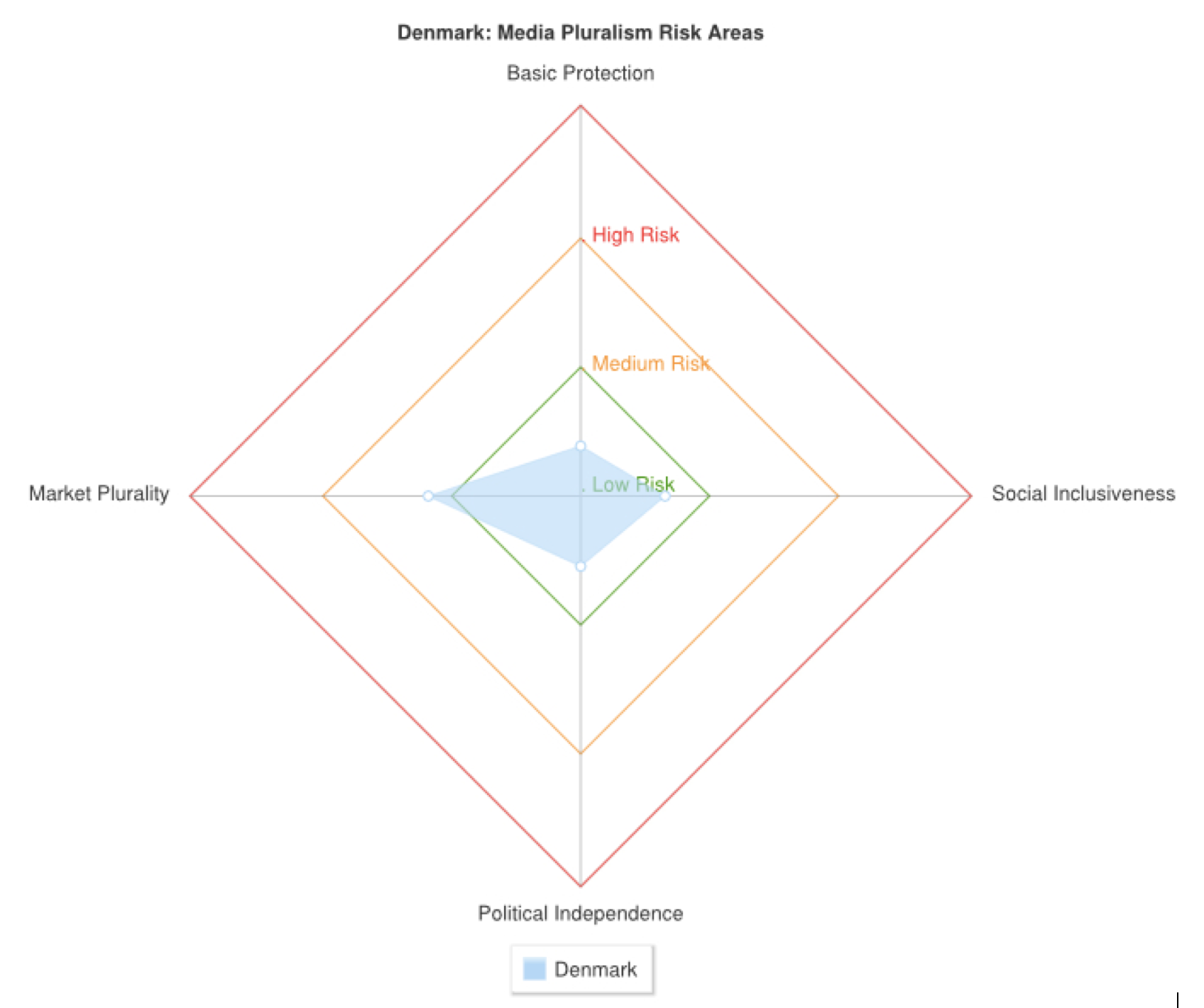
The overall result for Denmark is a low risk to media pluralism in three areas: Basic Protection, Political Independence, and Social Inclusiveness. The Market Plurality area is in the medium risk band.
The low risk regarding Basic Protection, Political Independence and Social Inclusiveness could be expected in Denmark, where there is a general focus on the protection of citizen rights as well as the rights of journalists, an overall political consensus to support both privately and publicly owned media, respect for upholding the arms lengths principle ensuring editorial freedom and a general focus on media pluralism and diversity in media policies.
The overall low risk to media pluralism should however not downplay the risk factors documented in this report.
Regarding Market Plurality, the report shows a high risk regarding media ownership concentration and a medium risk regarding cross-media ownership. This can be explained by the fact that the Danish media market (i.e. the area where Danish is the first language) is by nature very small with a population of 5.7 million inhabitants.
Regarding Social Inclusiveness, the overall risk is low, but behind this lies a risk regarding access to media for minorities and for women. Part of the explanation is that there are no quota policies for media as in many other countries. Instead Denmark has a “soft policy” approach focusing on media pluralism and media diversity – but without quantitative measures. The soft policy focus on social inclusion is visible in laws for media support both for privately owned media and public service media.
3.1. Basic Protection (13% – low risk)
The Basic Protection indicators represent the regulatory backbone of the media sector in every contemporary democracy. They measure a number of potential areas of risk, including the existence and effectiveness of the implementation of regulatory safeguards for freedom of expression and the right to information; the status of journalists in each country, including their protection and ability to work; the independence and effectiveness of the national regulatory bodies that have competence to regulate the media sector; and the reach of traditional media and access to the Internet.
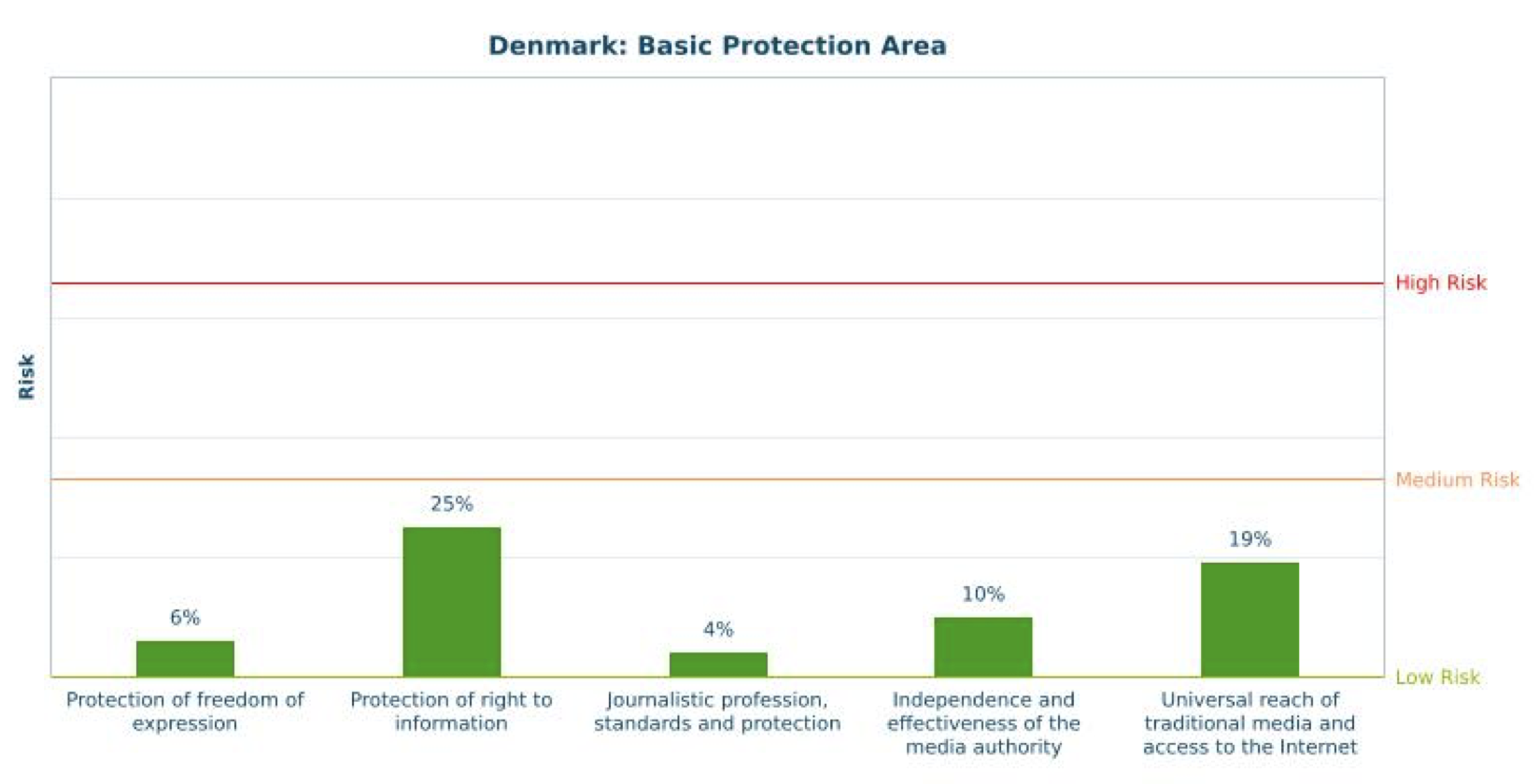
The overall result for the Basic Protection area in Denmark as a low risk in all of the indicators covered by the MPM.
Regarding the protection of freedom of expression (low risk, 6%) and freedom of information (low risk, 25%), the Danish legal system follows the practice of the European Court of Human Rights[4] . As examples the Danish Supreme Court explicitly referred to Jersild v Denmark in a judgment UfR 1997.259H, and in a defamation suit, UfR 2015.3106H, the Supreme Court referred to several ECtHR judgments such as Axel Springer v Germany with a rather in depth analysis and to Ungvary & Irodalom v Hungary. The courts often state that the Danish provisions, which as regards defamation date back to the 1930s, must be interpreted in the light of the ECHR and the Court’s case law.
The indicator on the Journalistic profession, standards and protection shows a very low risk (4%). This is largely due to the strong professional association DJ (Danish journalists) where most journalists are represented and that has a tradition for ensuring good working conditions and protection of professional standards. The access to the journalistic profession is open and transparent and typically goes through one of the three Danish journalism schools, one at an university college and the two others at universities.
The Independence and effectiveness of the media authority also poses a low risk (10%). The Danish Radio and TV Board is an independent institution overseeing if the public service media complies with their public service contracts and licenses. The board controls all public service media both media financed mainly by license fees (DR, The regional TV 2 stations and radio 24/7) and media financed by a combination of subscription fees and commercials (TV 2). The Media Committee (Medienævnet) oversees the public media support for privately owned media and is also an independent institution.
Universal reach of traditional media and access to internet also poses a low risk in Denmark (19%). DR reaches almost all citizens with TV and radio channels, TV 2 is also accessible in all parts of the country alongside the regional stations, and Denmark has a very high internet penetration in all of the country.
3.2. Market Plurality (39% – medium risk)
The Market Plurality indicators examine the existence and effectiveness of the implementation of transparency and disclosure provisions with regard to media ownership. In addition, they assess the existence and effectiveness of regulatory safeguards to prevent horizontal and cross-media concentration of ownership and the role of competition enforcement and State aid control in protecting media pluralism. Moreover, they seek to evaluate the viability of the media market under examination as well as whether and if so, to what extent commercial forces, including media owners and advertisers, influence editorial decision-making.
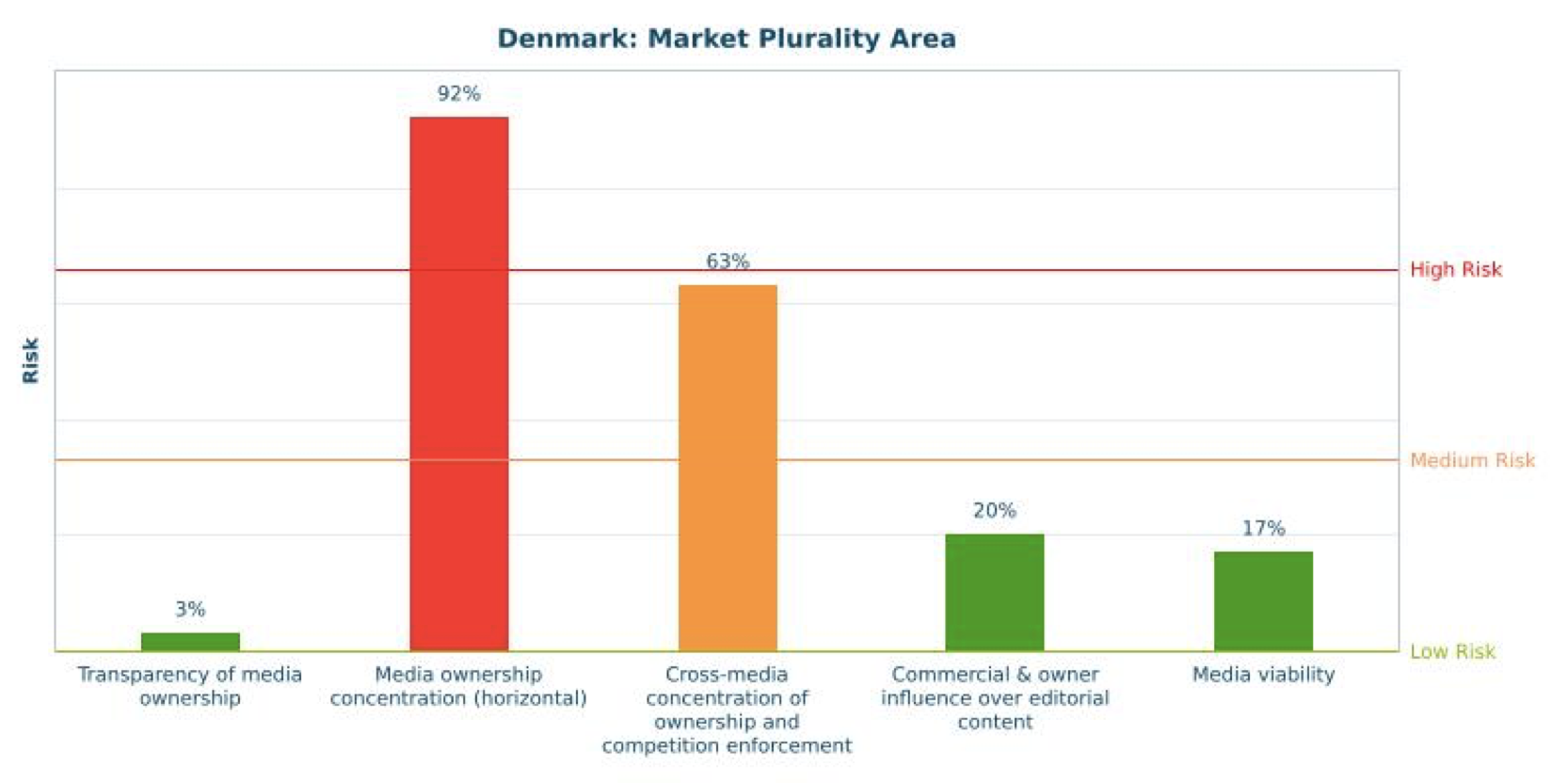
In Denmark, there are no separate rules on transparency for media companies. Instead they follow the general rules as stated in the Financial Statements Act[5]. Private limited and co-operative companies have to state all owners with more than 5% ownership. All ownership above 20% of the shares has to be stated in the annual accounts. The fact that media companies follow the general rules does not mean that there is no transparency or that information is not available. Everyone can access the annual accounts of media companies, although there is a fee at the company register (cvr.dk), and most companies have the accounts on their website. Therefore, the Transparency of media ownership in Denmark poses a very low risk (3%).
The horizontal Media ownership concentration, however, poses a very high risk (92%) together with a medium risk (close to high risk) when it comes to Cross-media concentration of ownership and competition enforcement (63%). This result can be explained by two factors: 1) Denmark is a small media market, and 2) the Danish state is a large domestic media owner, owning the two large broadcasting companies as well as eight regional public service broadcasters (based on license fee funding), with one regional television channel each and regional windows on the largest television channel TV 2, if measured by audience. Furthermore (especially relevant to the cross-media ownership concentration) the largest national news agency (Ritzau) is owned by a large group of media companies including the Danish PS broadcaster DR.
The indicator regarding Commercial and owner influence over editorial content scores a relatively low risk (20%). This result mirrors different characteristics of the Danish media system such as the fact that there are no political owners of newspapers or formal political ties between the political system and the newspapers owned by either commercial owners or not-for-profit foundations, and that the principle of armslength (that owners or boards do not interfere with the editorial decisions) is applied in both privately owned media as well as public service media.
Media viability scores a low risk at 17%. Regarding the relatively small size of the Danish media market, this is a condition with an effect on most media commodities and is especially the case for news media and the production of domestic audiovisual content for instance high quality drama and content for children. As the population is just above 5.6 million there is a limited number of consumers to pay for media content, and as the main language is Danish there is only a very limited market for Danish media productions outside of the country. In order to secure pluralism of media content, there is a tradition of broad political support for the existence of strong public service media and some degree of subsidy for editorial content in printed and online news media as well as subsidies for community radio and television.
3.3 Political Independence (18% – low risk)
The Political Independence indicators assess the existence and effectiveness of regulatory safeguards against political bias and political control over the media outlets, news agencies and distribution networks. They are also concerned with the existence and effectiveness of self-regulation in ensuring editorial independence. Moreover, they seek to evaluate the influence of the State (and, more generally, of political power) over the functioning of the media market and the independence of public service media.
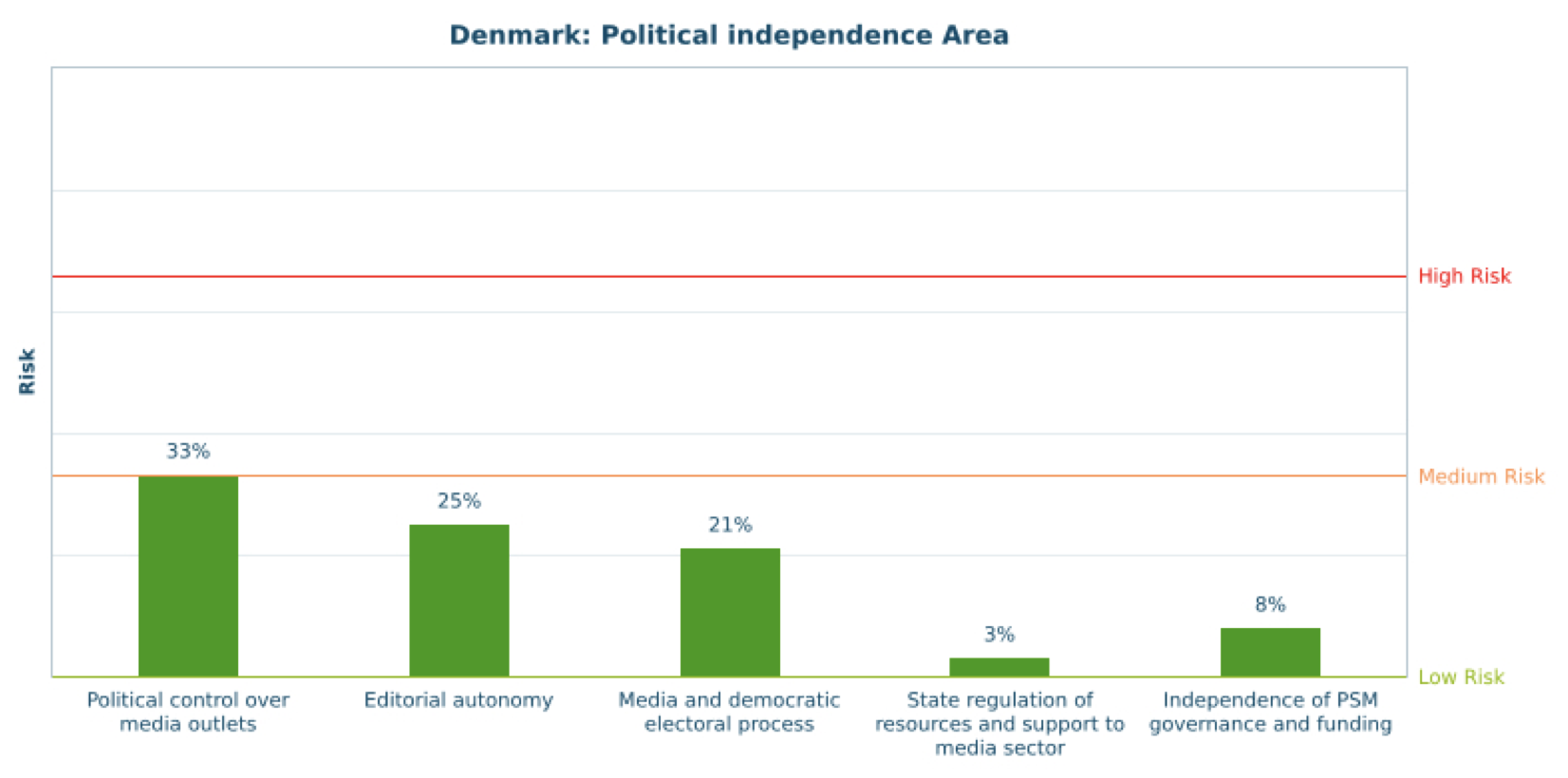
The overall result of the Political Independence area is a low risk.
Regarding Political control over media outlets the risk is at the tipping point between a low and medium risk (33 %). This is due to the lack of specific regulation (e.g. conflicts of interest) but there is no misconduct observed in practice. The printed (and online) press has a tradition of editorial freedom including a freedom to express political opinions and no political parties own newspapers in Denmark.
In the analyses of Editorial autonomy the indicator shows a 25 % risk. This result might seem odd to journalists, politicians and researchers familiar with the Danish media system with a tradition for editorial independency when it comes to both private and public service media. The result however, can be explained by the fact that Denmark does not have a high degree of regulatory safeguards, but relies on the tradition of self-regulation, for instance codes of ethics and codes of conduct, and a very strong institutionalisation of the Danish Press Council (only very few media are not members).
Denmark has different policies ensuring a low risk (21%) when it comes to Media and the democratic electoral process. Some of them can be considered “soft policies” such as a general statement in the public service contract 2015-2018 stating that DR (Danmarks Radio) must “stimulate participation in the public debate and democratic processes”. An example of a more “hard policy” is the total ban of political advertising on Danish television.
The indicator on State regulation of resources and support to the media sector scores a very low risk (3%) highly due to the transparent legislation on media support. Both public service media and privately owned media are eligible to public media support. Public service media are mainly financed by licence fees. This economic model are discussed in public from time to time, but until now there has not been a political majority to change it. Privately owned media – both print and online – are eligible to “production support” if they live up to different criteria relating to the production of quality news content (for instance a certain amount should be original, be of interest to many people, cover different beats etc.). Production support is given to established media but there is also an “Innovation pool” supporting new and innovative news media. The media support policy focusing on “journalistic production” in 2015 replaced a previous policy supporting “media distribution” and will be evaluated after three years in 2018.
The Independence of PSM governance and funding is also at a low risk in Denmark (8 %) mainly due to the general armslengths principle.
3.4. Social Inclusiveness (22% – low risk)
The Social Inclusiveness indicators are concerned with access to media by various groups in society The indicators assess regulatory and policy safeguards for community media, and for access to media by minorities, local and regional communities, women and people with disabilities. In addition to access to media by specific groups, the media literacy context is important for the state of media pluralism. The Social Inclusiveness area therefore also examines the country’s media literacy environment, as well as the digital skills of the overall population.
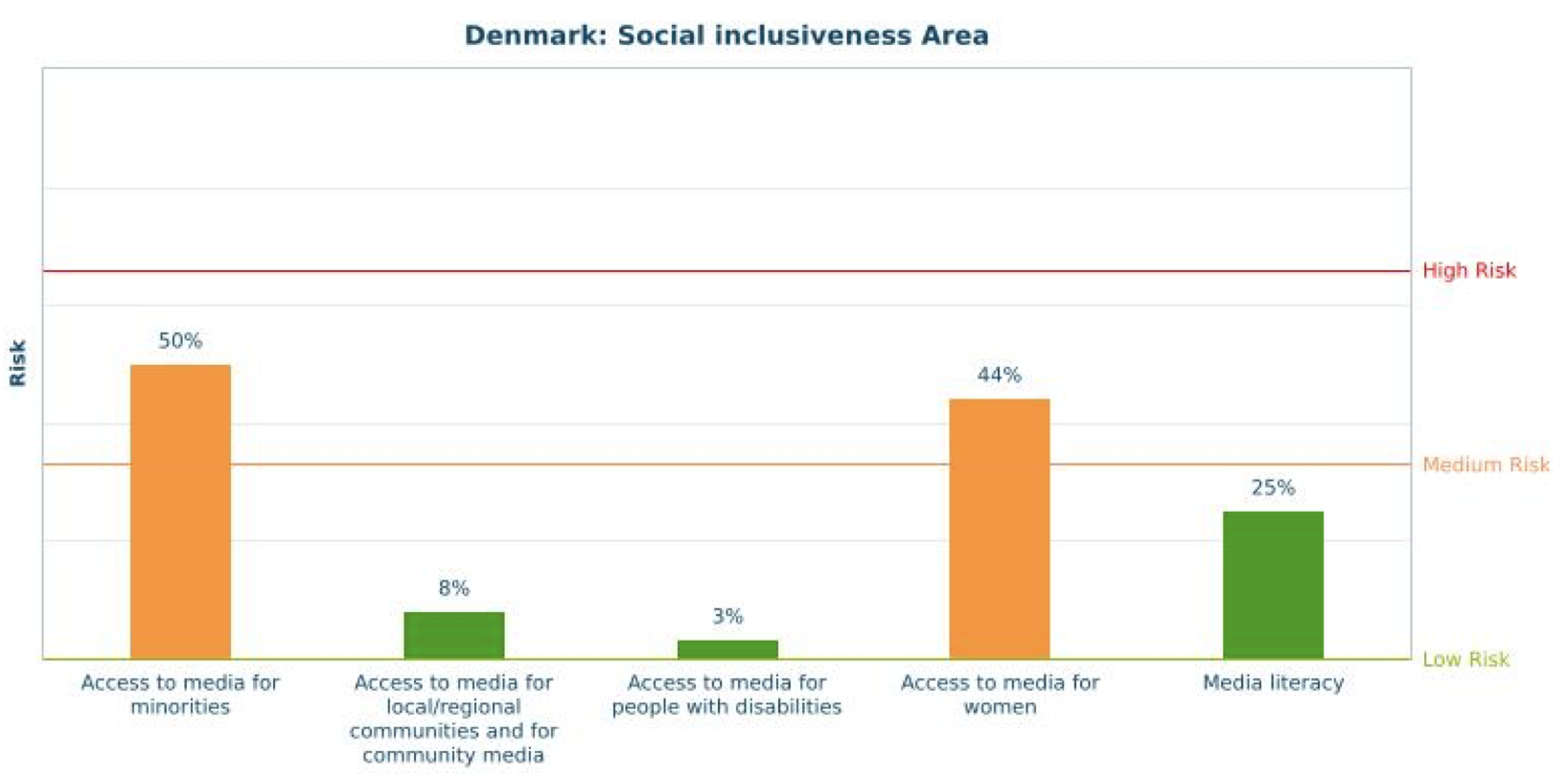
Two indicators in the area of Social Inclusiveness score medium risk: Access to media for minorities (50%) and Access to media for women (44%). This can partially be explained by the fact that Denmark has no quota policies in regard to assuring access for minorities or women to media. Instead, there are “soft policy” guidelines focusing on pluralism and diversity but not operating with quantitative measures such as quota. We also find that a separate explanation to the medium risk regarding the access to media for minorities has to do with the methodology of the MPM, which does not take into account that Denmark is a very small media market with even smaller language minorities, and as such there are no viable markets for a range of minority language media.
As for the general question of social inclusiveness it is important to note that Denmark has a strong tradition of editorial independence and armslength between politicians and media companies, and that public media support – both to PSM and the printed and online press – is given with explicit instructions on pluralism and diversity.
PSM has complete editorial independence and are not limited by law in any way in terms of choosing who should and should not have access to airtime. But at the same time, there is an explicit focus on pluralism and diversity.[6] For instance Article §10 in the Radio and Television act (Article §10) states that “The overall public service activities shall, via television, radio and the Internet or similar, provide the Danish population with a wide selection of programmes and services comprising news coverage, general information, education, art and entertainment. Quality, versatility and diversity must be aimed at in the range of programmes provided. In the planning of programmes, freedom of information and of expression shall be a primary concern. Objectivity and impartiality must be sought in the information coverage. Programming shall ensure that the general public has access to important information on society and debate. Furthermore, particular emphasis shall be placed on Danish language and culture. Programming shall cover all genres in the production of art and culture and provide programmes that reflect the diversity of cultural interests in Danish society.”[7] As such, the fact that various cultural and social groups do not have quota access to airtime should not necessarily be considered a risk indicator but rather an empirical question for further research. For instance, social inclusiveness is directly mentioned in the current public service contract (valid from 2015-2018) where it is stated (own translation) that: “DR must offer a broad societal coverage and reflect the pluralism of culture, ways of life and living conditions in the different parts of the country”[8].
Printed and online newspapers in Denmark also have editorial freedom and no quota policies regarding access for minorities and women. Women increasingly hold executive positions as editors and managers at newspapers and are visible but not strongly represented on the newspaper boards.
Regarding the low risk for Access to media for local/regional communities and for community media (8% risk score), this can partly be explained by the fact that Denmark has a relatively large number of privately owned local and regional newspapers and radio stations, public service funded regional television stations (TV 2 regions) as well as a relatively strong (and recently increased) presence of the PSM DR in regional communities and community media such as local radio stations.
The indicator on Access to media for people with disabilities scores very low risk (3%). Interviews with disability organisations and a review of the PSM provisions in that regard points to a very low risk regarding the access to media for people with disabilities.
The media literacy indicator also scores a low risk (3%). Media literacy is in the curriculum of most education institutions and the Danish press association has a project each year where they work together with schools to enhance knowledge of news media and news media literacy. The expert interview and available sources pointed towards the difficulty of defining and measuring but assessed the risk to media literacy in Denmark to be low.
4. Conclusions
The MPM analysis for Denmark shows a low risk to media pluralism in all four areas covered by the study, both basic protection, political independence, social inclusiveness and – although in lesser degree – market pluralism.
The medium risk in the market pluralism area can for the most part be explained by the fact that Denmark is a relatively small media market. This means that a certain degree of ownership concentration and cross-ownership must be expected.
The general picture of low risk regarding media pluralism in Denmark are not surprising and can be expected in a Nordic country, where there is a general focus on general protection of citizen rights as well as the rights of journalists, an overall political consensus on giving public media support to both privately and publicly owned media while upholding the arms lengths principle ensuring editorial freedom, as well as a general focus on media pluralism and diversity in media policies and media law.
Because of the generally low risk in Denmark the country team has no policy recommendation.
Annexe 1. Country Team
The Country team is composed of one or more national researchers that carried out the data collection and authored the country report.
| First name | Last name | Position | Institution | MPM2016 CT Leader (please indicate with X) |
| Ida | Willig | Professor (mso) | Roskilde University | x |
| Mark | Blach-Ørsten | Professor (mso) | Roskilde University | |
| Sten | Schaumburg-Müller | Professor | Syddansk Universitet | |
| Søren | Sandfeld Jakobsen | Professor (mso) | Aalborg University |
Annexe 2. Group of Experts
The Group of Experts is composed of specialists with a substantial knowledge and experience in the field of media. The role of the Group of Experts was to review especially sensitive/subjective evaluations drafted by the Country Team in order to maximize the objectivity of the replies given, ensuring the accuracy of the final results.
| First name | Last name | Position | Institution |
| Holger | Rosendahl | Director of legal affairs | Danske Medier (Danish Media, publishers association) |
| Peter | Skov | Director of legal affairs | DR (Danmarks Radio, PSB) |
| Per | Jaurt | Associate professor, Aarhus University | Member of the Danish Radio and Television board (regulator of PSB) |
| Poul | Thøis Madsen | Associate professor, Danish Media and Journalism Professional School | Expert on media economy |
| Henrik | Søndergaard | Associate professor, Copenhagen University | Expert on media policy |
| Søren | Sandfeldt Jakobsen | Professor, Aalborg University | Expert on media law |
| Troels | Johannesen | DJ (Danish Association of Journalists)
|
—
[1] For more information on MPM methodology, see the CMPF report “Monitoring Media Pluralism in Europe: Application of the Media Pluralism Monitor 2016 in EU-28, Montenegro and Turkey”, https://monitor.cmpf.eui.eu/
[2] “Immigrants in Denmark 2015” (Indvandrere i Danmark 2015), report by the Danish Statistical Agency
[3] (Brink Lund, 2007:122)
[4] See also the report from the Mediadem project [https://www.mediadem.eliamep.gr/wp-content/uploads/2012/01/Denmark.pdf])
[5] https://www.retsinformation.dk/Forms/R0710.aspx?id=135933
[6] For instance, social inclusiveness is directly mentioned in the current public service contract (valid from 2015-2018) where it is stated (own translation) that: “DR must offer a broad societal coverage and reflect the pluralism of culture, ways of life and living conditions in the different parts of the country”. https://kum.dk/fileadmin/KUM/Documents/Kulturpolitik/medier/DR/Public_Serviceaftale_2015-18/DR_public_service-kontrakt_for_2015-2018.pdf
[7] https://www.retsinformation.dk/forms/R0710.aspx?id=161625
[8] https://kum.dk/fileadmin/KUM/Documents/Kulturpolitik/medier/DR/Public_Serviceaftale_2015-18/DR_public_service-kontrakt_for_2015-2018.pdf