

Bulgaria
Media Pluralism Monitor 2025 results
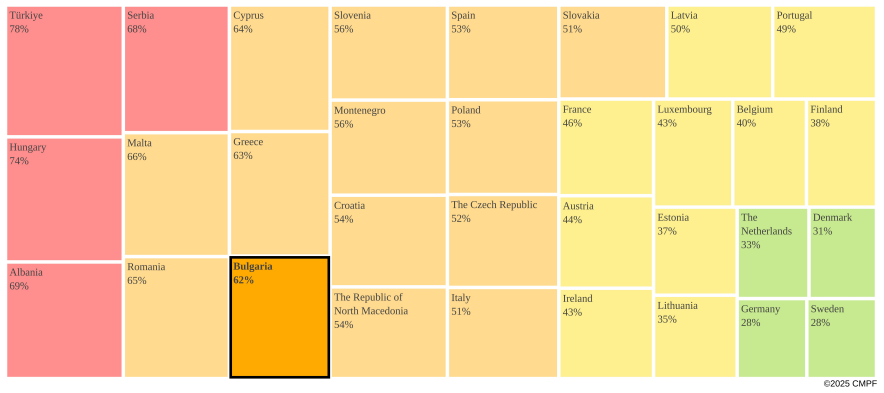
Risk score: 62%
| Fundamental Protection | 58% |
| Market Plurality | 71% |
| Political Independence | 53% |
| Social Inclusiveness | 68% |
In-depth analysis:
Read the full MPM2025 Country report
Country overview
The political situation in Bulgaria remains unstable. The series of early parliamentary elections and political parties’ inability to form a robust regular government continued in 2024 with two early elections – on 9 June and on 27 October. Amid scandals about irregularities and violations of the law, the October elections led to another fragmented configuration of forces in the National Assembly. Eight parties passed the electoral threshold, with the Velichie party falling just twenty-one votes short. In January 2025, after a three-month process of negotiations among the parties, the National Assembly approved a coalition government led by the centre-right GERB and three coalition partners with differing political views. In March 2025, the Velichie party eventually joined the parliament after the Bulgarian Constitutional Court had ordered a partial recount of the elections. The new composition of the National Assembly has led to a narrowing of the coalition majority and uncertainty for the government. In this context of ongoing political instability, media pluralism continues to face serious challenges, and major legislative changes remain delayed. As of 1 April 2025, there is no progress regarding a series of bills, including those aimed at: strengthening the independence of public service media (PSM); refining the functions of the regulatory authorities in line with the evolving EU legal framework; better aligning national legislation with Directive (EU) 2019/1937 on protection of whistleblowers; aligning national legislation on data retention with EU law. Furthermore, the lack of sector-specific regulation of media market concentrations is a main risk to media pluralism. Although amendments to the Public Procurement Act have been made to improve transparency in the allocation of state advertising, there are shortcomings in the legal framework, and fair distribution of public funds/state advertising to the media is far from guaranteed. The lack of anti-SLAPP legislation in Bulgaria continues to leave journalists vulnerable to legal harassment, and SLAPP cases continue to take place in practice. Overall, the state of freedom of expression remains fragile and even deteriorated in 2024, with a series of cases of intimidation, threats, and attacks against journalists, especially during electoral campaigns. Regulation of the digital media environment remains problematic amidst widespread disinformation and controversial practices of content moderation and access blocking. Bulgaria has not yet empowered an authority to act as Digital Services Coordinator (DSC) and taken further steps to implement the Digital Services Act (DSA). On the positive side, in 2024, Bulgaria adopted amendments to the Criminal Code for more accurate transposition of EU rules on racism and xenophobia in relation to the Council Framework Decision 2008/913/JHA.
Fundamental Protection
The Fundamental Protection area scores within the medium-high risk band. Key points include:
- Improvements with regard to freedom of expression in the last couple of years have not proved sustainable. Risks are increasing amidst a wide range of reported violations.
- Anti-SLAPP legislation has yet to be adopted in Bulgaria. Despite growing concerns of civil society and monitoring organisations, SLAPP cases continue to take place and have a negative effect on freedom of speech.
- The implementation of the Digital Services Act is delayed. Bulgaria has not yet empowered the national DSC.
- Content moderation by online platforms continues to trigger complaints for not being transparent and impartial enough.
- In 2024, in a context of a volatile political situation, there were controversial requests by public authorities for removal of online content.
- While a comprehensive strategy to tackle disinformation and address the threat of foreign information manipulation is lacking, initiatives to monitor, research, and debunk disinformation are carried out mostly by civil society organisations (CSOs), academic and media organisations. However, their overall impact remains limited, and Bulgarian society is still highly susceptible to disinformation.
- The practice of state institutions not providing or delaying access to public information persists.
- Against the backdrop of concerns about risks to whistleblowers in practice, national legislation for protection of whistleblowers needs further refinement for the full transposition of the Directive (EU) 2019/1937 of the European Parliament and of the Council of 23 October 2019 on the protection of persons who report breaches of Union law.
- Safety of journalists is at risk amidst reported cases of threats and attacks to media professionals and online harassment of journalists and fact-checkers.
- Journalists face unfavourable working conditions as well as high levels of stress in the workplace.
- Refinements in national legislation are necessary in order to strengthen the effectiveness of national regulatory authorities. Against this background, there are signs of internal instability in the Council for Electronic Media, whose members in 2024 failed to elect their regular chairperson.
Market Plurality
The Market Plurality area is in the high-risk zone. Key points include:
- Despite existing legal provisions for transparency of media ownership, in 2024, as in previous years, many media organisations did not declare their ownership details. Most problematic is the situation in the online sector.
- The lack of a sector-specific legal framework on media market concentrations and the absence of basic market data do not allow for assessing the impact of market concentrations on media pluralism.
- There is anecdotal information from newsrooms about some efforts for financial agreements between digital intermediaries and news publishers in Bulgaria for compensating copyright holders, with no verified signed agreements. Additionally, there are no known agreements between Generative AI providers and media organizations for the use of copyright-protected content.
- Against the backdrop of unsustainable and uneven media viability, the state does not provide subsidies or other public incentives to media outlets. The use of innovations and alternative revenue models by media companies remains fragmented and underdeveloped.
- There are no mechanisms granting protection to journalists – in accordance with the Commission Recommendation (EU) 2022/1634 of 16 September 2022 on internal safeguards for editorial independence and ownership transparency in the media sector – in cases of arbitrary interferences by owners, changes of ownership or editorial line. Self-censorship in the media due to economic dependence on commercial entities persists.
Political Independence
The Political Independence area falls within the medium-high risk band. Key points include:
- There are ongoing concerns regarding direct and indirect political control over the media. Editorial autonomy remains fragile and susceptible to political interference. In 2024, journalists pointed out political pressure as a leading source of external pressure in the newsrooms.
- Self-regulation is still not effective enough in guaranteeing editorial independence in practice. Many media outlets have not yet signed the Code of Ethics of the Bulgarian Media, nor do they follow any other internal codes of ethics.
- Although the indicator on integrity of political information during elections scores a low risk, in 2024 experts and media professionals have reiterated concerns about overregulation of the PSM. In addition, bias and unethical practices during electoral campaigns continue to take place in private media outlets.
- There is evidence of concerns about interference by third country sponsors in the pre-electoral period, namely the dissemination of Russia-controlled disinformation.
- Despite the amendments to the Public Procurement Act, adopted at the end of 2023 and aimed at increasing transparency in state advertising allocated to radio, television, and on-demand media service providers, there are significant gaps in the legal framework. In practice, state advertising remains a tool for political instrumentalization and ensuring media comfort.
- Regardless of the detailed legal framework and self-regulatory instruments, the independence and impartiality of the public service media are not guaranteed. Issues regarding the mandate of the director general of the BNT continue to raise concerns amidst legal disputes following CEM’s failure to elect director general in 2022.
- There has been no progress in providing better guarantees for the independence of the PSM regarding the funding mechanisms.
Social Inclusiveness
The Social Inclusiveness area falls within the high-risk band. Key points include:
- Universal and inclusive access to media is partly problematic due to insufficiently high percentages of access to fixed and mobile broadband. Although there is progress in media accessibility for people with disabilities, there is a significant need for further improvement.
- The monitoring indicates both good practices and significant deficiencies in the representation of marginalised groups. Overall, there are gaps in the media coverage of cultural and linguistic diversity on TV and radio channels.
- Protection against hate speech remains largely ineffective. While online hate speech is rampant, content moderation faces challenges and often produces inconsistent results.
- The state of local and regional media continues to be at serious risk against the backdrop of fragile media viability, unsustainable markets, and widespread economic and political dependence.
- Although women journalists are well-represented among media organisations’ personnel, they are largely insufficiently represented in leadership positions. As for media content, data show gender imbalance in news and political content, with male experts being better represented than female experts in media coverage of political issues.
- The level of media literacy in Bulgaria remains low. While there is no comprehensive state policy, the main efforts to promote media literacy are made by CSOs. The presence of media literacy in the education curricula is insufficient. Vulnerable groups are still largely out of the scope of media literacy initiatives.

Bulgaria
(June 2014)
Introduction
The implementation of the MPM2014 for Bulgaria shows a medium/high risk for media pluralism in the country. In general, the risks to media pluralism in Bulgaria are divided as follows: 32% (11) of the indicators fall within the zone of high risk; 53% (18) indicate medium risk, and 15 % (5) refer to low risk.
Legal Type of Indicator Assessing Risks to Media Pluralism
The legal indicators show low (four indicators), medium (nine indicators) or high (seven indicators) risks for the different aspects of media pluralism in Bulgaria.
Low risk has been identified in the following indicators: Regulatory safeguards for access to airtime on PSM by the various cultural and social groups (7); Regulatory safeguards for locally oriented and locally produced news delivered by PSM channels and services (10); Fair, objective and transparent appointment procedures for PSM professionals and management boards (17); Regulatory safeguards for the distribution of public interest channels on cable, DSL and/or satellite platforms (18).
The indicators concerning PSM fall into this group with one exception (indicator 19 Regulatory safeguards for the objective and independent allocation of adequate, consistent and sufficient financial resources to PSM). The formerly state-owned radio Bulgarian National Radio (BNR) has been transformed, relatively successfully, into a public radio with seven regional centres in the country and one regional radio programme for the capital, Sofia.
The formerly state-owned television, Bulgarian National Television (BNT), has four regional centres situated in the cities of Blagoevgrad, Varna, Plovdiv and Russe. BNT and BNR have regional correspondents. PSM are regulated by the law both strictly and in detail. A broad spectrum of measures aimed at transparency and grounded on objective criteria for appointments and dismissals in PSM have been implemented. Nevertheless, the independence of PSM is still not fully protected in practice. The effective implementation of the legal safeguards for appointment and dismissal procedures in PSM is a function of the independence of the Council for Electronic Media (CEM) and varies according to its composition.
The legal measures are also effective – must-carry and must-offer rules were introduced at the initial stage of the liberalisation of the market for the main programme services of the PSM (cable and satellite must-carry). BNT and BNR provide at no charge (FTA) programme services to their cable, satellite and digital terrestrial broadcasting.
A large number of commercial TV programme services have been licensed for mandatory DTT transmission. Nevertheless, the absence of must-offer obligations for commercial TV stations, combined with the high costs of DTT transmission, is reducing the number of commercial FTA programme services that are transmitted terrestrially.
Medium risk has been identified in the following indicators: Regulatory safeguards for freedom of expression (1), Regulatory safeguards for right to information (2), Recognition of media pluralism as intrinsic part of media freedoms and/or as a policy objective of media legislation and/or regulation (3), Regulatory safeguards for the journalistic profession (4), Policies and support measures for media literacy (and digital literacy in particular) among different groups of population (6), Regulatory safeguards against high concentration of ownership and/or control in media, high degree of cross ownership between television and other media, for transparency of ownership and/or control (12–14) and policy measures for the impartial circulation of internet data, without regard to content, destination or source (20).
Communication rights are explicitly recognised in the Constitution. Bulgaria has signed and ratified the relevant Treaty obligations with no significant exemptions. According to these, the press and the other mass information media are free and shall not be subjected to censorship. Individuals have criticised the government without official reprisal. Freedom of expression online is generally respected. The media’s regulatory environment is generally accepted as meeting international standards, but observers point to a continuing trend to biased implementation of the rules protecting media freedom. The existing laws do not provide fully effective protection for the access to information— the rules are bypassed, or they are selectively implemented.
As a policy objective, media pluralism is envisaged in the Radio and Television Law concerning PSM only, according to which PSM shall reflect the different ideas and beliefs in society. The Constitutional Court recognises media pluralism as an intrinsic part of media freedoms. However, the principle of media pluralism is not respected in practice. A main problem is the lack of effective legal remedies against media concentrations and the non-transparency of media ownership. According to the European Commission’s first EU Anti-Corruption report, media ownership in Bulgaria is increasingly concentrated, thus compromising editorial independence.
Access to the journalistic profession is open. The protection of journalistic sources has generally been enforced. The ethical codes envisage a clear distinction between editorial decision-making, the commercial policy of the media and the protection of the editorial independence. Nevertheless, infringements of the rules are commonplace; self-regulation has proved ineffective in raising the standards of professionalism among journalists, as had been hoped.
The promotion of media literacy is not the statutory duty of the media regulatory authority in Bulgaria. Academic centres and NGOs provide the specific knowledge that is necessary for different types of digital competency and media literacy.
The risk in the field of media concentrations is medium. This conclusion is based on the fact that the media sector is not excluded from the scope of the implementation of the competition law. According to public opinion, however, non-transparent media ownership and the concentration of media outlets within a few conglomerates remain the weakest features of Bulgarian media, and the problem has continued to become more acute. Hidden forms of media ownership and control accompany the process of the liberalisation of the Bulgarian media market. No sector-specific competition measures are envisaged in Bulgarian law. The media have no obligation to publish their ownership structures on their websites or in documents that are accessible to the public.
High risk has been identified in the following indicators: Regulatory safeguards for the independence and the efficiency of the relevant national authorities (5), Regulatory safeguards for minority and community media (8), Regulatory safeguards and policies for regional and local media (9), Regulatory safeguards for the universal coverage of the media (11), Regulatory safeguards for fair, balanced and impartial political reporting in media (15), Regulatory safeguards against excessive ownership and/or control of mainstream media by politicians (16), Regulatory safeguards for the objective and independent allocation of adequate, consistent and sufficient financial resources to PSM (19).
The Council for Electronic Media (CEM) is defined by law as being an independent specialised body, which is guided by the public interest, protecting the freedom and pluralism of speech and information and the independence of media service providers. The competencies of the Council are sufficient, but some additional areas of competence are under discussion, such as: media pluralism evaluation, new media services’ evaluation in the context of the remit of PSM, etc. The members of the media regulator have often been nominated by civil society organisations and then elected after public hearings. The competition regulator in Bulgaria is the Commission for the Protection of Competition (CPC). The regulator in the area of electronic communications in Bulgaria is the Communications Regulation Commission (CRC). The risk of political and economic influence over the regulatory bodies varies, but their independence is generally assessed as being problematic. Apart from the political leanings of some members of the regulatory authorities, there are also cases when political pressure is suspected.
Ownership of media by politicians is not explicitly prohibited or limited in Bulgaria, but interference is generally prohibited by law: The Radio and Television Law guarantees the freedom of media service providers and of the activities thereof from political and economic interference. When politicians are public office holders, in terms of the Conflict of Interest Prevention and Ascertainment Act, they have an obligation to disclose any private interest.
Another domain of high risk is PSM funding. BNT and BNR are being financed via a state subsidy, defined year-on-year in the respective annual State Budget Act. BNT and BNR are allowed to include in their programming services a very limited amount of advertising. The state subsidies are calculated according to a ‘per hour of programming’ principle as detailed in the law. The Vice-President of the European Broadcasting Union, Claudio Cappon, during his visit in 2014, urged Bulgaria’s top politicians to ensure sufficient and sustainable funding for PSM. “Bulgarian public radio and television receive only a quarter of the EU’s average public funding, which i about 30 euros per capita. PSM need funds in order to be able to carry out their mission – something topical for all states in the European Union”, he said. Budgets for public media are insufficient and their remit cannot be realised with the current level of funding, warned the President, Rosen Plevneliev. The National Assembly’s President confirmed that the Parliament is aware of the problem and is committed to finding a solution.
Media law does not contain specific provisions for minority and community media. The Council for Electronic Media is obliged by the law to grant individual radio and television broadcasting licenses to radio and television broadcasters for national/regional programming services. The Bulgarian legislation does not envisage the reservation of frequencies for regional and local media, or must-carry rules for such media. Experts from CEM declare that, in practice, the specific experience of applicants from corresponding regions has been taken into account. There are regional newspapers in the major cities throughout the country, as well as local newspapers.
Fair, balanced and impartial representation of political viewpoints in news and current affairs programmes on PSM channels and services is subject to regulation by the Radio and Television Law. There are no specific requirements concerning impartiality in news and current affairs programmes on the commercial channels and services. The access of political actors to airtime on PSM during election campaigns is not covered by media legislation because the election campaigns are regulated by the Election Code.
Economic Type of Indicators Assessing the Risks to Media Pluralism
There are significant economic risks to media pluralism in Bulgaria. Four of the six economic indicators are indicative of high-risk domains. There is one medium-risk domain. One indicator is evaluated as low risk, but its evaluation is under the circumstances of data shortages and lack of ownership transparency, which is a risk to media pluralism in its own right.
Low risk has been identified in the domain of 26 Centralisation of the national media system. Regional media are relatively well developed in terms of the numbers of titles and outlets. According to data from the National Statistical Institute, the proportion of regional and local TV and radio channels to national channels is above 80% of the proportion of regional to national population. The proportion of existing regional and local newspapers to the national newspapers is under 80% of the proportion of regional to national population. The audience share of local and regional TV stations is estimated by the Council for Electronic Media to be between 5-15% and the audience share of local and regional radio stations is estimated to be between 10-30%. Although general evaluation is of low risk, the lack of accurate data on all aspects of media system centralisation is already indicative of structural deficiencies within the system.
Medium risk has been identified in the domain of 24 Availability and quality of broadband. Fixed and mobile broadband penetration in the country is below the EU average. The quality of available broadband, however, is of a high level. Both download and upload speeds are higher than the EU average. In addition, the country is among the top 3 member states within the EU with the highest growth rates in fixed broadband penetration.
High risk has been identified in the domains of 21 Media ownership concentration; 22 Media audience and readership concentration; 23 Number of sectors in which Top 8 firms/owners are active; 25 Minority and community media.
Concentration of media ownership is very high. The Top 4 major owners in the television sector have an aggregated market share (based on advertising revenue only) of 93.35%. The Top 4 major owners of daily newspapers have an aggregated market share of 79.7%. The Top 4 major ISPs have an estimated market share that is above 50%. The market shares of owners of radio stations cannot be evaluated.
Audience and readership media concentration is also very high. In television, the Top 4 major owners have an audience share that is above 70%. An aggregated audience share of the Top 4 major owners in the radio sector is 83.16%. The Top 4 major newspaper owners have an estimated readership share between 25-49%, and the subscription share of the Top 4 major ISPs is estimated to be above 50%.
A precise evaluation of cross-ownership is difficult to track due to deficiencies in the data. As far as the data that are available are concerned, they point to the assessment that the Top 8 major owners have a market share that is above 70% across the different media sectors.
Minority and community media development is another high-risk factor. There is no television or radio channel that is dedicated to ethnic, linguistic or national minorities. Existing minority newspapers are very few and far smaller than the proportional size of the minority population.
Socio-political Type of Indicators Assessing Risks to Media Pluralism
Generally, there are medium socio-political risks to media pluralism in Bulgaria. All eight socio-political indicators (27–34) are indicative of medium-risk domains.
Policymaking in regard to the promotion of access to media content and services by special needs groups is underdeveloped. There is a national strategy that envisages an effective legal framework obliging all media to provide content in an adequate and appropriate way to people with disabilities, as well as access to all types of media content (print, broadcast, audio, audio-visual, online). Such standards, however, have not yet been effectively introduced. As a whole, access to television content by people with hearing disabilities is limited.
The universal coverage of PSM and broadband networks in relation to geographical coverage faces some difficulties. It has been calculated that less than 98% of the population (96.2%) is covered by the public TV channels’ signal (terrestrial broadcasting). Some compensatory measures are being taken by the state to guarantee access to digital television for those individuals who are deprived of the free television signal. More than 99% of the population has access to public radio broadcasting. The rural coverage of DSL is less than 75%. The rural coverage of cable modem exceeds 15%. The relatively low general internet penetration in rural areas remains a problem.
The evaluation of political bias in the media during the election campaign for the European Parliament in May, 2014, indicated that the selected media represent the main political actors in a relatively balanced manner (one group – “other actors” – is more than 20% above the balanced representation of 25% per group, but this fact can be assessed as being a reflection of the presence of a wide variety of opinions). The proportion of the one-sided portrayal of political actors in the selected media items is low (under 25%).
Data on the political affiliations of media owners are generally insufficient. There is a deficit in transparency in regard to media ownership (especially of the press). A precise evaluation of the market shares, based on the total revenues of the media companies operating in Bulgaria, is hardly feasible. As a whole, the politically affiliated owners of leading media distribution networks who have been identified tend to occasionally discriminate against other market players.
The ratio of the state advertising and the audience share are relatively balanced in television and radio; there is no transparency for the press. Public service media receive comparatively low funding. A relatively small number of companies make use of public funds to a greater extent than do others. The law allows (for electronic media) the resources to be granted without public procurement, which is a precondition for subjectivism and political influence. Some of the campaigns have an unproven effectiveness.
Two alternative Codes of Ethics coexist in Bulgaria. As a result, the ethical standards are split according to the interests of different media groups. In practice, professional and trade union protection of journalists is very ineffective. With a few exceptions, there is a lack of confidence in the organisations that have declared such goals. Instead of turning to the trade unions, journalists are increasingly looking for support and protection directly from the NGO community.
The major mechanism for financing the public Bulgarian National Television (BNT) and Bulgarian National Radio (BNR) is the annual state budget subsidy. The state subsidy exceeds 25% of the total budget of both BNT and BNR. The government does not decide on the wages for the PSM’s employees. The wages of the employees are decided by the managing bodies of BNT and BNR.
The Bulgarian Telegraph Agency (BTA), the largest news agency, is owned by the state. The market share of BTA is estimated to be between 30% and 50%. The appointment of key personnel at BTA is considered to be mainly based on professional criteria. The institution has a reputation for high professional standards and political independence. In Bulgaria, there are two large private news agencies. A few more private media organisations call themselves “information agencies”, but they essentially operate as news sites that do not have many of the formal characteristics of a news agency.
Bulgaria
Download the report in .pdf
English – Bulgarian
Authors: Orlin Spassov, Nelly Ognyanova, Nikoleta Daskalova
December 2016
1. About the Project
- Overview of the project
The Media Pluralism Monitor (MPM) is a research tool that was designed to identify potential risks to media pluralism in the Member States of the European Union. This narrative report has been produced within the framework of the first pan-European implementation of the MPM. The implementation was conducted in 28 EU Member States, Montenegro and Turkey with the support of a grant awarded by the European Union to the Centre for Media Pluralism and Media Freedom (CMPF) at the European University Institute.
- Methodological note
The CMPF cooperated with experienced, independent national researchers to carry out the data collection and to author the narrative reports, except in the cases of Malta and Italy where data collection was carried out centrally by the CMPF team. The research was based on a standardised questionnaire and apposite guidelines that were developed by the CMPF. The data collection was carried out between May and October 2016.
In Bulgaria, the CMPF partnered with Foundation Media Democracy, which conducted the data collection, commented the variables in the questionnaire and interviewed relevant experts. The report was reviewed by CMPF staff. Moreover, to ensure accurate and reliable findings, a group of national experts in each country reviewed the answers to particularly evaluative questions (see Annexe 2 for the list of experts).
To gather the voices of multiple stakeholders, the Bulgarian team organized a stakeholder meeting, on October 11th, in Sofia. An overview of this meeting and a summary of the key points of discussion appear in the Annexe 3.
Risks to media pluralism are examined in four main thematic areas, which are considered to capture the main areas of risk for media pluralism and media freedom: Basic Protection, Market Plurality, Political Independence and Social Inclusiveness. The results are based on the assessment of 20 indicators – five per each thematic area:
| Basic Protection | Market Plurality | Political Independence | Social Inclusiveness |
| Protection of freedom of expression | Transparency of media ownership | Political control over media outlets | Access to media for minorities |
| Protection of right to information | Media ownership concentration (horizontal) | Editorial autonomy
|
Access to media for local/regional communities and for community media |
| Journalistic profession, standards and protection | Cross-media concentration of ownership and competition enforcement | Media and democratic electoral process | Access to media for people with disabilities |
| Independence and effectiveness of the media authority | Commercial & owner influence over editorial content | State regulation of resources and support to media sector | Access to media for women
|
| Universal reach of traditional media and access to the Internet | Media viability
|
Independence of PSM governance and funding | Media literacy
|
The results for each domain and indicator are presented on a scale from 0 to 100%. Scores between 0 and 33% are considered low risk, 34 to 66% are medium risk, while those between 67 and 100% are high risk. On the level of indicators, scores of 0 were rated 3% and scores of 100 were rated 97% by default, to avoid an assessment of total absence or certainty of risk[1].
Disclaimer: The content of the report does not necessarily reflect the views of the CMPF or the EC, but represents the views of the national country team that carried out the data collection and authored the report.
2. Introduction
The total population of Bulgaria is 7 153 784 (2015).[2] According to the latest census (2011), the Bulgarian ethnic group is the largest with 84.8% of the Bulgarian population. The Turkish ethnic group is the second largest and making up 8.8%. The Romany group is the third and accounts for 4.9%. These ethnic groups are recognized by the law. The adult literacy rate reaches 98.4%.[3] Bulgarian is the mother tongue for 85.2% of the population, Turkish being the second with 9.1% and Roma with 4.2%.[4]
The economic situation is relatively stable, but at low level. In 2015, Bulgaria was the member state with the lowest per-capita GDP, at 53% below the EU average.[5] Bulgaria has remained the poorest country in the EU. Unemployment rates of the population aged 15 and over are 9.1% (2015).[6] The economy faces many serious problems, including, amongst others, corruption – corruption perceptions score ranks 69 of 168 countries (2015).[7]
In the course of 2015 and 2016 there were tensions in the ruling coalition, which is conformed by parties of very diverse ideologies – the powerful centre-right GERB and its partners Reformist Bloc, Patriotic Front and ABC. The opposition is weak and fragmented. International affairs have been among the main causes for instability in the past few years. Refugee wave in Europe along with Russia’s military intervention in Syria and other key events have had a strong impact on the main topics discussed in political debates and taken up by the media. Against this background, many media have contributed to the escalation of polarization in society. The use of hate speech in the media has increased significantly. Extreme views close to racism and xenophobia have become frequent in some online media, tabloid newspapers, party TVs and on social networks.
The media market is diverse but still highly dependent on political and economic influences. The total number of newspapers in 2015 is 283 (the dailies are 51).[8] The number of newspapers per capita is 37.2.[9] There are 116 registered TV operators. The radio operators are 84.[10] The total TV and radio revenues are respectively 214 595 000 and 36 230 000 EUR, which is indicative of a general decrease in the total revenues in both sectors.[11] According to other data, the investments in advertising in 2015 are 169 150 000 EUR on a net basis, which is an increase of 8.3% compared to 2014[12], along with a growth of the gross advertising budgets in four sectors: Internet (plus 27.5% in 2015 compared to the previous year), outdoor advertising (plus 11.6%), radio (plus 8%) and television (plus 2.7%).[13]
In 2015, 59.1% of the households had access to the internet at home (a growth of 2.4%, compared to the previous year). The relative share of households using broadband internet connection was 58.8%.[14]
The 2016 World Press Freedom Index of Reporters Without Borders places Bulgaria at 113th position among 180 monitored countries (last place in the EU).[15] In the Freedom of the Press ranking of Freedom House, in 2015 Bulgaria occupies the 78th position – out of 199 countries and territories.[16] Freedom House defines Bulgarian media as ‘partly free’. The 2016 Media Sustainability Index by IREX indicates, in 2015, there was a rise in crimes against journalists, including harassment by public figures and violent attacks.[17] The Mapping Media Freedom Index reports eight cases of attacks and threats to the physical safety of Bulgarian journalists (from May 2014 to April 2016), as well as other cases of threats to media freedom in the country (harassment, censorship, etc.).[18] A number of Bulgarian non-governmental organizations (Association of European Journalists – Bulgaria, Foundation Media Democracy, etc.) indicate similar problems: interventions by media owners, advertisers, state authorities and politicians in the work of the media, spread of self-censorship, etc.
3. Results from the data collection: assessment of the risks to media pluralism
In the Bulgarian case, high risks for media pluralism were detected primarily in the areas of ‘Market Plurality’ and ‘Political Independence’. Three of the ‘Market Plurality’ indicators point toward a particularly high risk: ‘Media ownership concentration (horizontal)’ (96%), ‘Commercial and owners’ influence over editorial content’ (92%) and ‘Cross media concentration of ownership and competition enforcement’ (89%). Two indicators in the ‘Political Independence’ domain point to high risk: ‘State regulation of resources and support for media sector’ (97%) and ‘Political control over the media outlets’ (79%).
There are also significant risks to media pluralism in Bulgaria identified within the ‘Social Inclusiveness’ area. Two indicators within this domain face a particularly high risk: ‘Media literacy’ (88%) and ‘Access to media for regional/local communities and community media’ (75%).
The area of ‘Basic Protection’ scores low to medium risk. The main problems here are identified within the indicator ‘Journalistic profession, standards and protection’ (50%).
To sum up the results of the study, the three major barriers to media pluralism refer to allocation of state advertising, interference in editorial content and concentration of ownership.
Two indicators are clearly outlined as scoring low risk: ‘Media and democratic electoral process’ (18%) and ‘Independence and effectiveness of the media authority’ (20%). Positive results in these areas are mostly due to available policies and legal provisions.
As a whole, the mixed performance of Bulgaria mainly refers to the fact that while in most cases the legal framework introduces necessary standards, they are frequently not effectively implemented in practice. Even within indicators with lowest risk there are often discrepancies between legal provisions and implementation. These peculiarities must be taken into account when making an overall assessment of media pluralism in Bulgaria. At the same time it should be pointed out that there have been some new developments in the media sector which happened after the 2016 MPM study was conducted (media law amendments, new regulation proposals, transformations of media outlets and other). Such ongoing developments influence the state of media pluralism in the country and have the potential to rapidly change the whole picture.
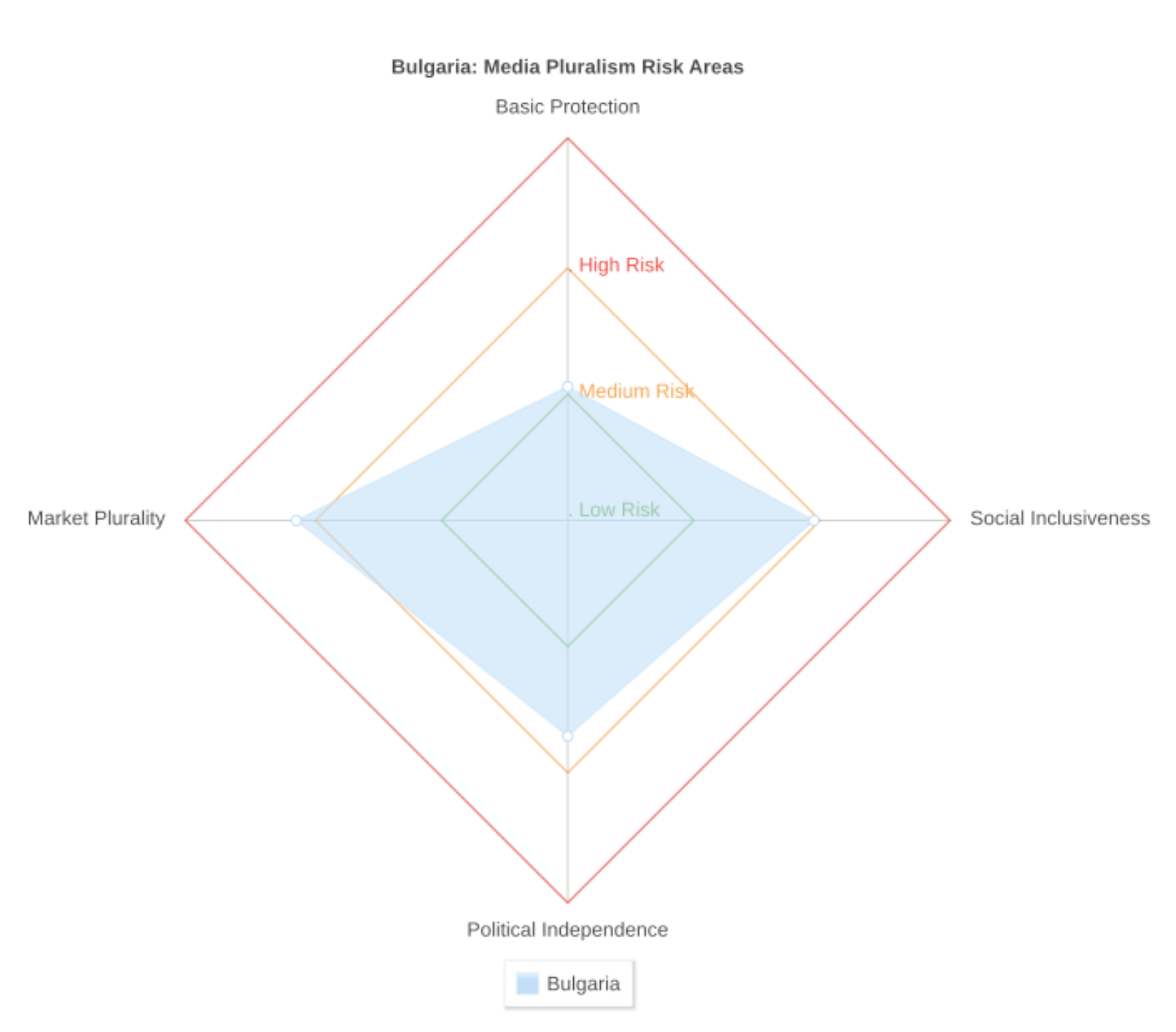
3.1 Basic Protection (35% – medium risk)
The Basic Protection indicators represent the regulatory backbone of the media sector in every contemporary democracy. They measure a number of potential areas of risk, including the existence and effectiveness of the implementation of regulatory safeguards for freedom of expression and the right to information; the status of journalists in each country, including their protection and ability to work; the independence and effectiveness of the national regulatory bodies that have competence to regulate the media sector; and the reach of traditional media and access to the Internet.
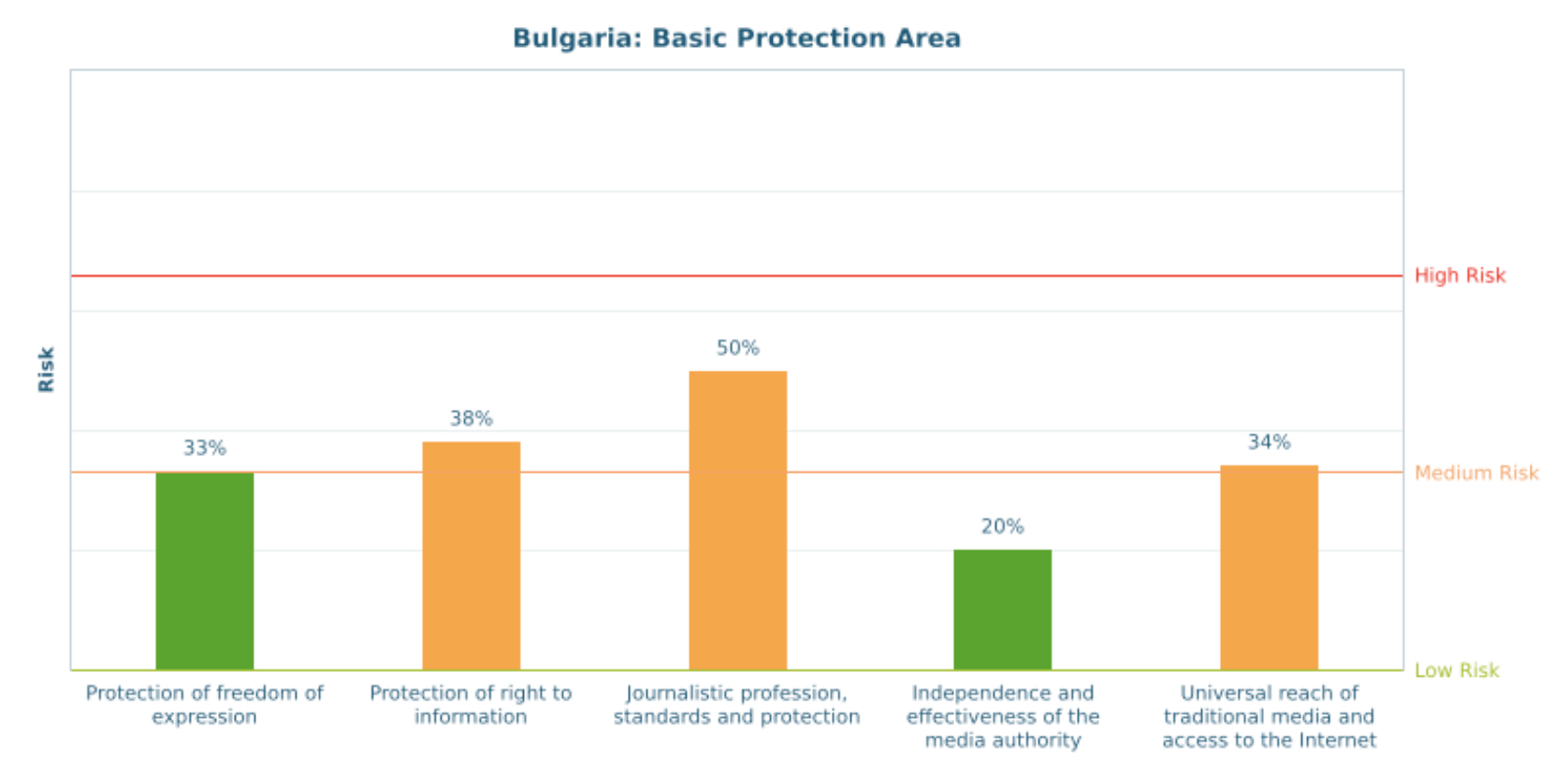
In the area of Basic Protection Bulgaria scores low to medium risk.
Freedom of expression (33% overall indicator risk) is explicitly recognized in the Constitution and media legislation. Bulgaria has ratified the relevant international documents in this regard, including ICCPR (in 1970) and ECHR (in 1992). Restrictions upon freedom of expression are clearly defined in the Constitution, the Penal Code and in the Radio and Television Act. In recent years, however, laws treating other subject areas, the financial sector in particular, have been implemented in ways that restrict the media. The Financial Supervision Commission, for example, has imposed record fines against several media outlets (Capital, Mediapool, Bivol, Zov News) in pursuit of disclosure of their sources of information. In practice, there are serious risks in terms of freedom of the media and of journalists. A wide range of local and international monitoring organizations (Reporters Without Borders, IREX, Freedom House, The Association of European Journalists – Bulgaria, Bulgarian Helsinki Committee and other) point out lasting and ongoing practices of systematic violations such as threats and harassment by public figures and institutions against journalists, corporate and political pressure on media, etc. Freedom of expression of citizens who are not journalists is generally respected, but in some occasions economic and political pressure is used for hindering individual citizens or entire professional communities from freely expressing an opinion. Defamation has not been decriminalized but the law provides for sufficient legal defences. The state and the ISPs generally refrain from filtering or blocking online content in an arbitrary way.
Protection of the right to information is at medium risk (38%). Although there are adequate legal provisions in this regard, problems with the implementation of the law persist. Appeal procedures are occasionally misused. There is an ongoing tendency of institutions not to respond to requests for access to information (so called silent refusals). Media professionals indicate that public institutions are becoming more and more creative in denying information to the media and to investigative journalists in particular.
The indicator on Journalistic profession, standards and protection scores medium risk (50%). Despite the existence of a few journalistic organizations, in practice not many active journalists are unionized. Professional associations are not particularly effective in guaranteeing editorial independence. Working conditions for journalists face high job insecurities. Many media companies do not undertake to protect their journalists and are increasingly offering journalists contracts for services instead of full-time employment contracts, and little if any social benefits. Although there are self-regulatory mechanisms, disrespect of professional standards is a common practice.
The indicator on Independence and effectiveness of the media authority represents low risk (20%). However, there are important structural deficiencies leading to medium risk in some of the indicator’s variables. The independent specialized body which regulates media services in Bulgaria is the Council for Electronic Media (СЕМ). Two of its members are appointed by the President; the other three are elected by the Parliament. Election of members of CEM is often criticized by experts and professionals for being a political decision. Citizen participation in nominating CEM members is not guaranteed. In addition, in 2015 and 2016, there were several campaigns against the CEM in the context of political confrontations.
Reach of traditional media and access to the Internet is at medium risk (34%). Public television channels cover 96.2% of the population. More than 99% have access to public radio broadcasting. The leading three ISPs hold 60% market share.
3.2 Market Plurality (71% – high risk)
The Market Plurality indicators examine the existence and effectiveness of the implementation of transparency and disclosure provisions with regard to media ownership. In addition, they assess the existence and effectiveness of regulatory safeguards to prevent horizontal and cross-media concentration of ownership and the role of competition enforcement and State aid control in protecting media pluralism. Moreover, they seek to evaluate the viability of the media market under examination as well as whether and if so, to what extent commercial forces, including media owners and advertisers, influence editorial decision-making.
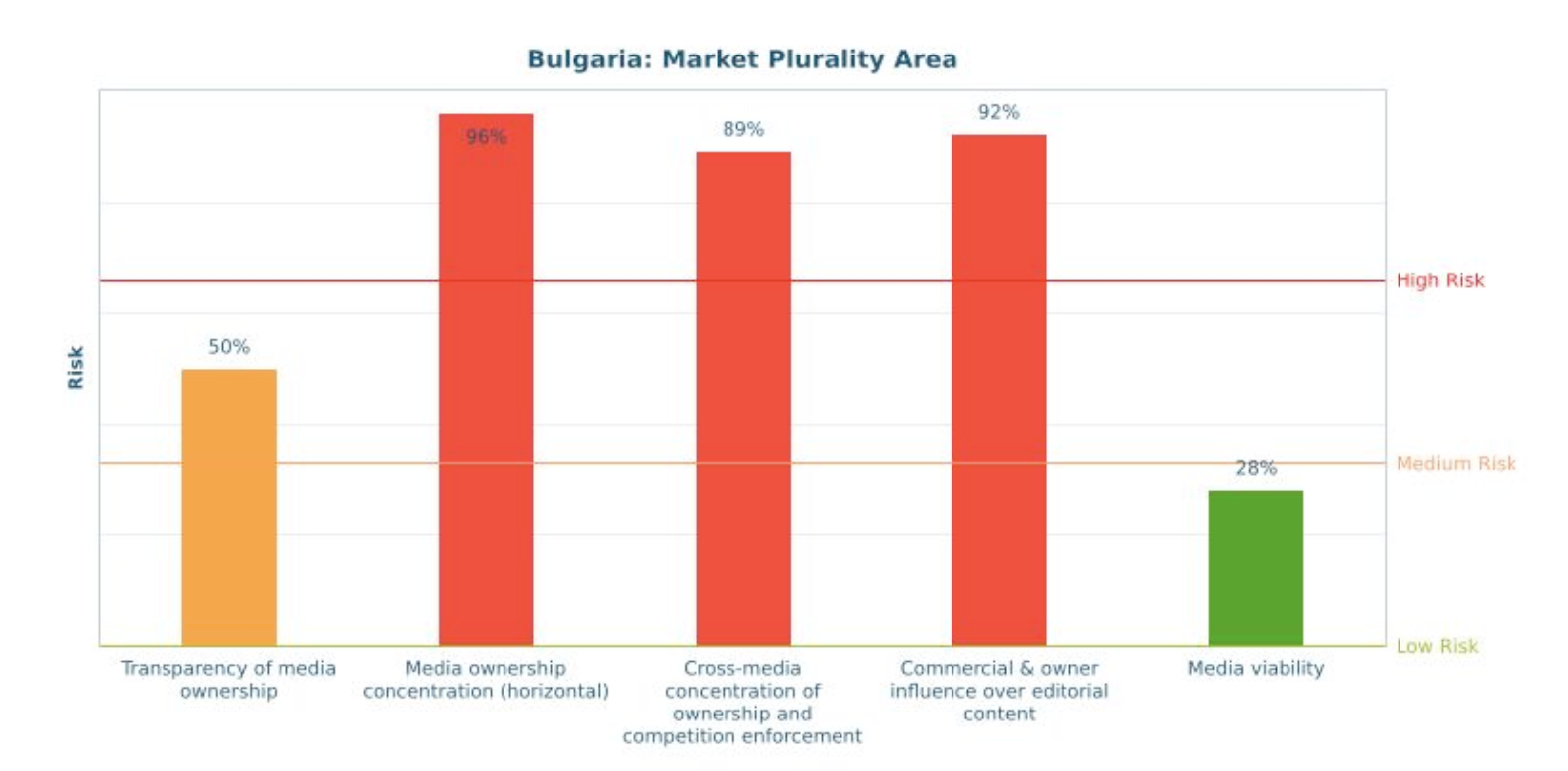
Market Plurality is one of the most problematic domains in the Bulgarian media realm.
The indicator on Transparency of media ownership scores medium risk (50%). Although there are formal legal provisions for disclosure of media ownership (Mandatory Deposition of Print and Other Works Act, Radio and Television Act, Commercial Register Act), the present legal requirements are not effectively implemented in practice. In some cases the actual owners of given media remain hidden to the public. Even though envisaged by law, sanctions for not complying with the transparency obligations have never been imposed on media outlets. In recent years, local and international organizations have stressed namely on the lack of ownership and financial transparency.
The level of horizontal concentration of media ownership indicates extremely high risk (96%). Media legislation does not contain specific thresholds in order to prevent a high degree of horizontal concentration of ownership. This refers to all media sectors. General rules in the competition law do not include specific provisions for the media market in particular. At the same time the actual level of concentration is impossible to track due to a deficit of precise data, which is considered as a risk itself. Full data on total revenues (including advertising, sales, subscriptions, etc.) generated in the different media sectors are not available. Accessible information on market shares is based only on partial advertising revenue data. Based on such incomplete information, the Top 4 concentration calculations show a high level of concentration in the audiovisual sector – 92%, and 57% concentration in the newspaper sector. There are no data regarding the radio sector. Available figures on Top 4 audience shares are also indicative of generally high concentration: 82% in the television sector, 81% in the radio sector and 35% in the newspaper market.
Cross-media concentration of ownership and competition enforcement is another high-risk indicator (89%). Again, media legislation does not provide for specific thresholds in order to prevent a high degree of concentration. Data insufficiency in terms of media ownership and market shares does not allow making an accurate evaluation of the actual cross-media concentration in the national market. In addition, the Commission for the Protection of Competition, the relevant regulatory authority, does not take into account, implicitly or explicitly, considerations about media pluralism when applying competition rules to the media sector. There are also no regulatory safeguards ensuring that State funds granted to PSM do not cause disproportionate effects on competition.
Commercial and owner influence over editorial content is the next indicator scoring high risk (92%). There are serious shortcomings of legal and self-regulatory instruments ensuring editorial independence: no mechanisms granting social protection to journalists in case of changes of ownership or editorial line; no regulatory safeguards ensuring that decisions regarding appointments and dismissals of editors-in-chief are not influenced by commercial interests; no measures stipulating that the exercise of the journalistic profession is incompatible with activities in the field of advertising. This corresponds to a situation in which media owners and other commercial entities systematically influence editorial content. The common practice of pressure over editorial independence has been illustrated and criticized in a number of studies and reports by monitoring organizations.
With regard to Media viability, an indicator scoring low risk (28%), it should be taken into consideration that data are controversial. There are seemingly positive tendencies in the online sector: an increase in the number of individuals using the Internet, in the percentage of people using mobile devices to access the Internet and in the expenditure for online advertising. However, there is a decrease in revenues in the audiovisual, radio and newspaper publishing sectors. Some media companies develop alternative sources of revenue and such measures help them to survive but not to make financial profits and to invest in the media business.
3.3 Political Independence (56% – medium risk)
The Political Independence indicators assess the existence and effectiveness of regulatory safeguards against political bias and political control over the media outlets, news agencies and distribution networks. They are also concerned with the existence and effectiveness of self-regulation in ensuring editorial independence. Moreover, they seek to evaluate the influence of the State (and, more generally, of political power) over the functioning of the media market and the independence of public service media.
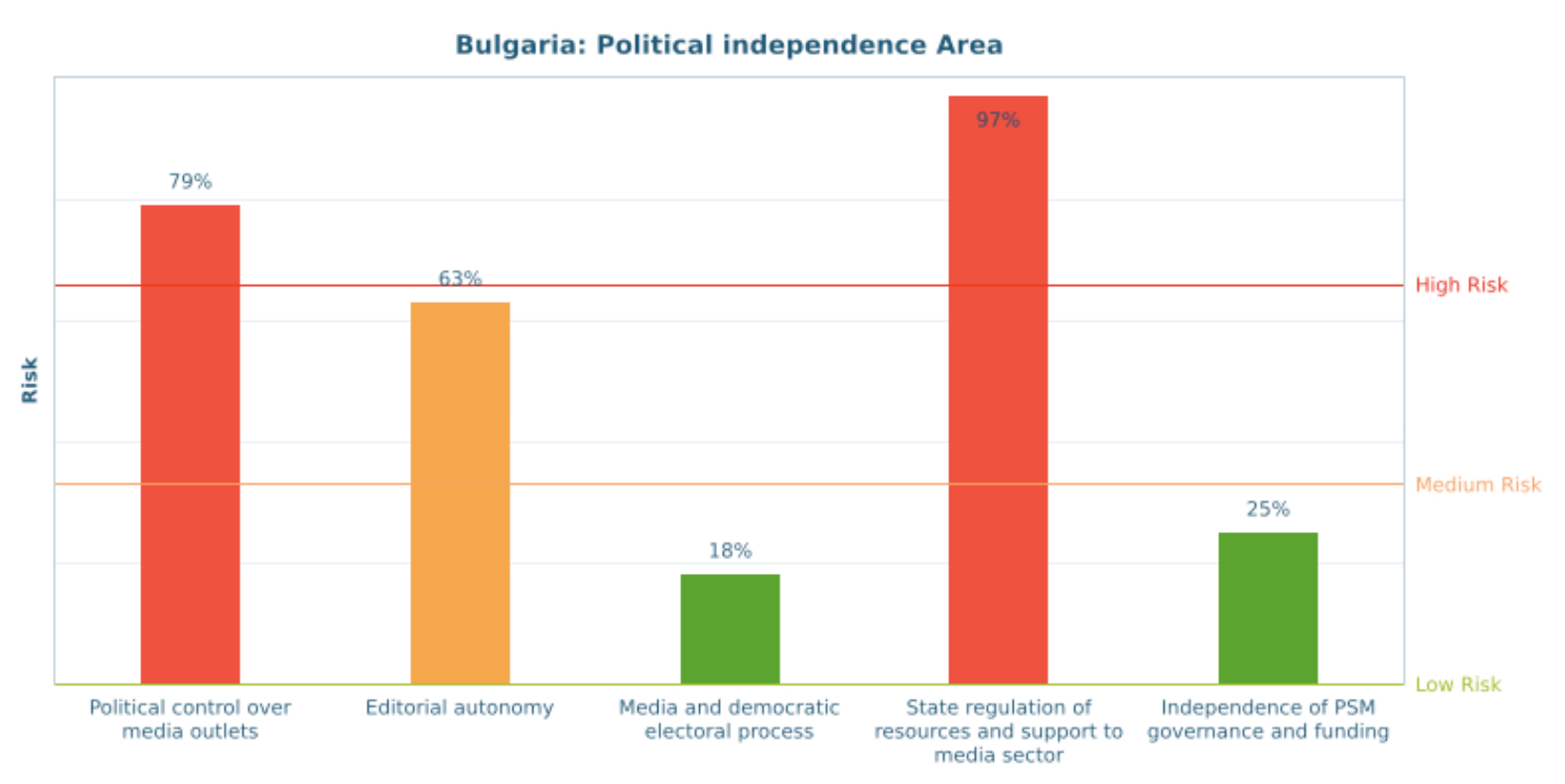
Risk levels within the Political Independence area are uneven.
Political control over media outlets indicates high risk (79%). There are general legal provisions against political interference, but media ownership as well as other direct and indirect control by politicians is not explicitly prohibited or limited by law. In Bulgaria, there are currently two party television channels (Alfa and SKAT); six newspapers are officially owned by MP Delyan Peevski. There are systematic cases of conflict of interests between owners of media outlets and the ruling parties, partisan groups and politicians. Political dependences and influences affect both national and local media. The assessments indicate high level of political control in the print media sector, medium level regarding the television sector and relatively weak control over the radio. Although the leading news agency is funded by the State, it has the reputation of being politically independent. The leading print media distribution network, however – the Lafka brand owned by Tabak Market – has been considered by experts as politically affiliated due to the participation of MP Delyan Peevski in the ownership of the company behind the network. Even though Peevski announced he was selling his share in March 2016, serious doubts remain about his influence in the distribution business.
Editorial autonomy in general is evaluated as of a medium risk (63%). There are no regulatory safeguards to guarantee autonomy when appointing and dismissing editors-in-chief. In the two party television channels, the procedures for the appointment of editors-in-chief are thoroughly dependent on the decisions of the respective party headquarters. Influences over other private media are difficult to prove. Regarding the PSM, there are no registered cases of interference in the appointment and dismissal procedures for editors-in-chief. Editorial independence is declared as a basic value in the existing self-regulatory rules. In practice, though, media professionals claim it is a wide-spread practice that MPs, ministers, heads of state agencies and other political figures would call or send SMS to owners, editors-in-chief and journalists in order to influence the editorial content. One of the most effective mechanisms of political control over the media is through advertising funds distributed by ministries and local municipalities.
The Media and democratic electoral process indicator scores low risk (18%) mainly due to the existing legal provisions aiming at fair representation of political viewpoints on PSM and on private channels. Law implementation, regulation by the media authority in practice and analyses of media content are also indicative of pluralism on the PSM during elections. Coverage of electoral campaigns on the leading private television channels is usually fair and balanced, with a few exceptions of channels and single journalists demonstrating political bias.
State regulation of resources and support to the media sector scores the highest risk of all MPM indicators (97%). There are no direct or indirect state subsidies to media other than PSM. There are also no regulatory safeguards for fair and transparent allocation of state advertising to media outlets. The actual practice of distribution of state advertising is neither clearly motivated, nor is safeguarded against pressure over the media.
The level of Independence of PSM governance and funding is at low risk (25%). In fact, this is the indicator with the highest degree of correspondence between legal provisions and implementation in practice, especially regarding the governance. Funding, however, is problematic. The main mechanism of financing the PSM is the state budget subsidy. The subsidy, calculated according to a ‘per hour of programming’ principle, is decided by the government on an annual basis and is voted by the National Assembly. The Government decides on the amount of financing without public discussion. The Directors General of the PSM and experts claim that budgets are insufficient and insist for a more sustainable and predictable model of financing.
3.4 Social Inclusiveness (64% – medium risk)
The Social Inclusiveness indicators are concerned with access to media by various groups in society. The indicators assess regulatory and policy safeguards for community media, and for access to media by minorities, local and regional communities, women and people with disabilities. In addition to access to media by specific groups, the media literacy context is important for the state of media pluralism. The Social Inclusiveness area therefore also examines the country’s media literacy environment, as well as the digital skills of the overall population.
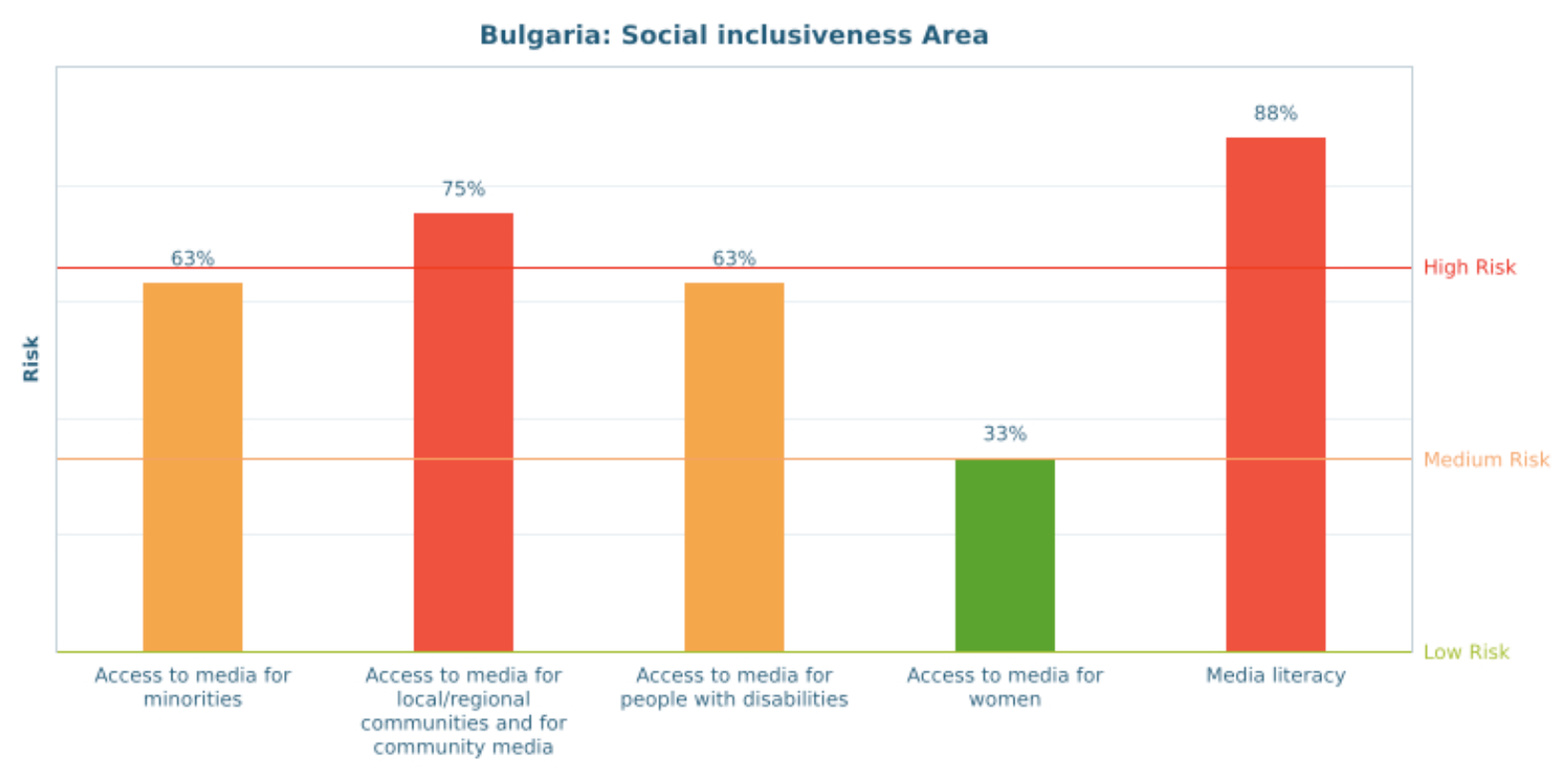
There are significant risks to media pluralism in Bulgaria identified within the ‘Social Inclusiveness’ area.
The Access to media for minorities indicator scores medium risk (63%). The Radio and Television Act includes broadly formulated obligations of the PSM regarding minorities’ access to airtime. In practice, the Bulgarian National Television (BNT) and the Bulgarian National Radio (BNR) are commonly inclined to cover minority-related events and to provide airtime to minority representatives. In general, however, reporting is not based on a special media policy but is rather occasional and event-driven. There is not also a clear principle of proportionality between the access to airtime and the size of the minority population. Regarding private radio and television channels as well as newspapers, content dedicated to minorities is overall not proportional to the size of the minority population. The minorities are placed in a disadvantageous position in this respect. As a whole, private media coverage is focused mostly on Roma-related issues, the second largest minority, but reporting is often biased, scandalous and driven by negative prejudices.
The level of risk regarding The access to media for local/regional communities is evaluated as high (75%). The Council for Electronic Media implements its legal obligations to grant licenses for regional program services. The PSM adhere to their obligations by law to create national and regional programmes, programmes for Bulgarians abroad and for Bulgarian citizens whose native language is not Bulgarian, including in their language. Regional and local media, however, are not supported by authorities through subsidies or policy measures. In fact, studies illustrate that instead of developing such measures, local authorities rather try to control regional media. Community media are neither envisaged in law, nor do they exist.
Access to media for people with disabilities indicates medium risk (63%). Policy making in this regard is underdeveloped, and relevant measures are not effective enough. Although media service providers are encouraged by law to develop accessible content for people with disabilities, audio descriptions for blind people have not been introduced yet, while audiovisual content adapted for people with hearing impairments is scarce. Only the PSM BNT provides content adapted for people with hearing impairments on a regular basis, albeit limited.
Access to media for women is the least problematic indicator within the domain of social inclusiveness (low risk of 33%). The PSM have not elaborated gender equality policy yet. However, in practice female staff prevails on the PSM (journalists, editors, administration)[19] and 60% of PSM management board members are women (on the management board of the public service television all five members are women). As for content, it is the journalists, editors and producers themselves who decide whether to adhere to any gender balance when preparing the programmes and inviting guest experts.
The level of media literacy in the country indicates the highest risk (88%) in the area of social inclusiveness. In Bulgaria, policy on media literacy has not been developed and there are no significant measures undertaken by state institutions. Media literacy is absent from compulsory primary and high school education curriculum. School teaching on this matter is scarce and is based on individual initiatives and projects. Media literacy activities are mainly carried out in non-formal education and by the civil society. These activities are only nascent, fragmented and limited in reach – targeted primarily at children and young people and implemented mainly in the capital city of Sofia.
4. Conclusions
The results of the 2016 MPM for Bulgaria indicate significant risks to media pluralism in the country. The main problems are in the areas of media concentration, editorial independence, state regulation of resources and social inclusiveness. Amongst other, fostering positive developments requires policy measures such as:
In the Basic Protection area:
- Improvement of legislation on the composition, independence and effectiveness of the Council for Electronic Media, the national media authority, by providing with civil society representatives in the nomination of CEM members, in the composition of the body and in the monitoring of CEM’s decisions and accountability.
- Protection of the right to information through more effective implementation of the Access to Public Information Act by state institutions.
- Promotion of campaigns for better professional protection of journalists (by NGOs, professional organizations, media stakeholders).
In the area of Market Plurality:
- Fostering implementation of media ownership transparency measures by the relevant regulatory authorities.
- Introduction of a ‘Media Plurality’ test in cases of media mergers (in the law and in the competencies of the regulatory authorities).
- Constant and sustainable monitoring of advertisers’ and media owners’ influence over editorial content – to be conducted by NGOs in order to help prevent commercial interference.
In the area of Political Independence:
- Reassessment of the Radio and Television Act regarding PSM independence and funding.
- Introduction of transparent and non-discriminatory regulation of governmental distribution of state advertising and public funds to the media.
- Effective enforcement of the provisions on distinguishing paid from editorial content in political coverage.
In the Social Inclusiveness area:
- Development of public policy on media literacy, and the introduction of the media literacy subject in school curriculum and in non-formal media education.
- Launching a special channel devoted to culture, with a solid focus on minority, gender and social issues, within the public-service BNT network – in order to improve the representation of diverse Bulgarian minorities and social groups.
- Increasing the access to media content for people with disabilities (by both PSM and private media).
- Introduction of policy measures to support regional and local media with regard to their financial sustainability, distribution, political and economic independence (by the government, local authorities, NGOs).
Finally, for a most precise monitoring and evaluation of media pluralism in the country, there is a general need for reliable and accessible media market data (market shares of owners in all media sectors, circulation and distribution figures, data on online media consumption and concentration, etc.). Such data could be provided by transparent and unbiased state, private or non-governmental institutions.
Annexe 1. Country Team
The Country team is composed of one or more national researchers that carried out the data collection and authored the country report.
| First name | Last name | Position | Institution | MPM2016 CT Leader (please indicate with X) |
| Orlin | Spassov | Executive Director | Foundation Media Democracy | X |
| Nelly | Ognyanova | Professor | Sofia University “St. Kliment Ohridski” | |
| Nikoleta | Daskalova | Researcher | Foundation Media Democracy |
Annexe 2. Group of Experts
The Group of Experts is composed of specialists with a substantial knowledge and experience in the field of media. The role of the Group of Experts was to review especially sensitive/subjective evaluations drafted by the Country Team in order to maximize the objectivity of the replies given, ensuring the accuracy of the final results.
| First name | Last name | Position | Institution |
| Anna | Goranova | Executive Director | Association of Bulgarian Broadcasters – ABBRO |
| Borislav | Shabanski | Chief Secretary | Council for Electronic Media |
| Ivo | Draganov | Professor | New Bulgarian University |
| Kristina | Hristova | President | Association of European Journalists – Bulgaria |
| Mehti | Melikov | Executive Director | Foundation National Council for Journalistic Ethics |
| Ruzha | Smilova | Professor | Sofia University “St. Kliment Ohridski” |
| Vesela | Vatseva | Executive Director | Bulgarian Association of Regional Media |
Annexe 3. Summary of the stakeholders meeting
- Date
11 October 2016
- Place
Information Centre of the EU in Sofia, Bulgaria
- Participants
The meeting was attended by media professionals, representatives of non-governmental organisations, media experts and participants in the group of experts.
- Key topics discussed
In the first part of the meeting the country team presented the MPM research tool and the main results of the 2016 Bulgarian data collection and risk evaluations. A discussion on the results for some of the indicators followed. The guests were particularly interested in the MPM methodology concerning the calculation of risk levels for indicators such as Protection of Right to Information, Media Viability, Media and Democratic Electoral Process, etc.
- Conclusions
The MPM is considered to be a very valuable research tool which provides an in-depth analysis of the risks to media pluralism in all important areas. However, the risk levels for some indicators within a given domain may look surprisingly incoherent for external observers if additional explanations are not provided. An illustrative example in the Bulgarian case refers to the Political Independence area where political control over the media outlets is at high risk while the indicator on the media and democratic electoral process scores low risk. That is why further listing of all questions and variables covered, including a note on their scope, would make the conclusions and risk evaluations even more methodologically transparent to the general public.
There is a general consensus on the main identified risks especially when the country-specific nuances are presented in addition to the risk level scores. With regard to the Protection of Right to Information indicator in particular, the participants in the meeting insisted on a positive evaluation of the Access to Public Information Act, naming it one of the most precise in Europe. In terms of the market plurality specifics in Bulgaria, the meeting attendees recommended that not only horizontal and cross-media concentration but also ownership of both media and non-media enterprises should be taken into consideration as well.
The low level of risk on media viability in the country is considered as problematic. It is argued that the calculation of the risk in question puts too much weight on the variables related to the online media as opposed to the variables on the traditional media sectors, where the trends are more contradictory.
The meeting attendees agreed that the deficiency of media market data hinders the precise evaluation of the risks to media pluralism.
—
[1] For more information on MPM methodology, see the CMPF report “Monitoring Media Pluralism in Europe: Application of the Media Pluralism Monitor 2016 in EU-28, Montenegro and Turkey”, https://monitor.cmpf.eui.eu/
[2] See: https://www.nsi.bg/en/content/6704/population-districts-municipalities-place-residence-and-sex (accessed: 29 August 2016).
[3] See: https://www.uis.unesco.org/Education/Documents/literacy-statistics-trends-1985-2015.pdf (accessed: 30 August 2016).
[4] See: https://www.nsi.bg/sites/default/files/files/pressreleases/Census2011final.pdf (accessed: 29 August 2016).
[5] See: https://ec.europa.eu/eurostat/statistics-explained/index.php/GDP_per_capita,_consumption_per_capita_and_price_level_indices (accessed: 1 September 2016).
[6] See: https://www.nsi.bg/en/content/6503/unemployed-and-unemployment-rates-national-level-statistical-regions-districts (accessed: 29 August 2016).
[7] See: https://www.transparency.org/cpi2015/ (accessed: 1 September 2016).
[8] See: https://www.nsi.bg/en/content/4577/issued-newspapers-periodicity (accessed: 29 August 2016).
[9] See: https://www.nsi.bg/en/content/4573/issued-newspapers (accessed: 29 August 2016).
[10] See: https://www.nsi.bg/en/content/4631/tv-operators (accessed: 29 August 2016) and https://www.nsi.bg/en/content/4621/radio-operators (accessed: 29 August 2016).
[11] See: https://www.nsi.bg/en/content/4635/revenue-and-expenditure-tv-operators (accessed: 29 August 2016) and https://www.nsi.bg/en/content/4625/revenue-and-expenditure-radio-operators (accessed: 29 August 2016).
[12] See: https://www.piero97.com/en/Media-market?yid=39&bid=40 (accessed: 2 September 2016).
[13] See: https://www.piero97.com/en/Media-market?yid=39&bid=41 (accessed: 2 September 2016).
[14] See: https://www.nsi.bg/sites/default/files/files/pressreleases/ICT_hh2015_en_CB5PDL6.pdf (accessed: 29 August 2016).
[15] See: https://rsf.org/en/ranking (accessed: 1 September 2016).
[16] See: https://freedomhouse.org/sites/default/files/FH_FOTP2016Report_Final_04232016-EMBARGOED.pdf (accessed: 1 September 2016).
[17] See: https://www.irex.org/sites/default/files/u105/EE_MSI_2016_Bulgaria.pdf (accessed: 1 September 2016).
[18] See: https://mappingmediafreedom.org/#/ (accessed: 1 September 2016).
[19] According to interviews with PSM key personnel conducted by the country team for the purpose of the MPM.